Lutein and Zeaxanthin for Eye Health: What the Research Actually Shows
Quick Answer: Do Lutein and Zeaxanthin Help Your Eyes?
To a real but specific extent. Lutein and zeaxanthin reliably raise macular pigment optical density — the pigment layer in the retina that filters high-energy blue light — and the National Eye Institute's AREDS2 trial found a formula containing them, plus zinc and antioxidant vitamins, slowed progression to advanced age-related macular degeneration in people who already had intermediate AMD. What the evidence does not show is that these nutrients sharpen vision in a healthy eye or prevent disease in low-risk people. And bilberry's "night vision" reputation rests on thin data.
- Strongest finding: AREDS2 slowed progression of advanced AMD in at-risk people.
- Doses that matter: 10 mg lutein and 2 mg zeaxanthin per day.
- Key caveat: support and risk-reduction, not a cure — see an eye doctor for symptoms.
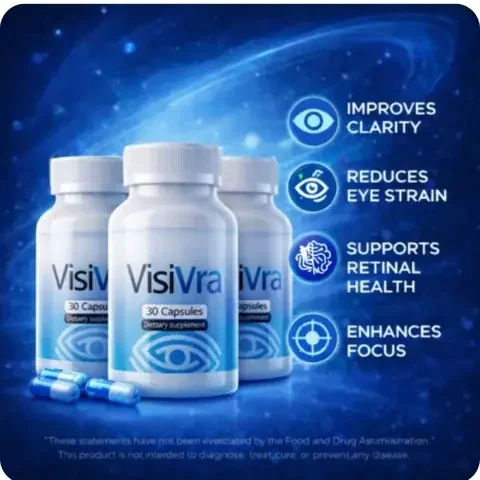
Why lutein and zeaxanthin, and why they are so often oversold
Lutein and zeaxanthin are carotenoids the body cannot manufacture; you get them from food. Uniquely, they concentrate in the macula — the small central patch of retina responsible for sharp, detailed vision — where they form a yellow pigment layer. That layer does two measurable things: it absorbs high-energy blue light before it can stress the photoreceptors, and it mops up some of the oxidative damage that light creates.
Because you can measure that pigment (macular pigment optical density, or MPOD), the effect of supplementing lutein and zeaxanthin is unusually well documented: intake goes up, MPOD goes up. Where marketing overreaches is the leap from "denser macular pigment" to "you will see better". A denser filter is plausibly protective over decades; it is not a same-week vision upgrade for a healthy eye.
How macular pigment actually works
Macular pigment is a physical filter, and that is the clearest way to think about it. Lutein, zeaxanthin and meso-zeaxanthin accumulate in the central retina in a specific spatial pattern and absorb light most strongly in the blue part of the spectrum — roughly 460 nm, which is exactly the wavelength band that scatters most inside the eye and carries the most energy per photon. Two consequences follow. Less blue light reaches the photoreceptors and the retinal pigment epithelium behind them, and less of the scattered light that degrades a retinal image ever forms.
The second job is chemical. The retina runs at an extraordinary metabolic rate in a tissue soaked in light and oxygen, which is close to a worst case for oxidative damage. Xanthophyll carotenoids quench singlet oxygen and interrupt lipid peroxidation chains in the photoreceptor membranes where they sit. Neither mechanism is speculative; both are measurable in the laboratory. What neither mechanism promises is a change you would notice this month.
Because the pigment is optically active, it can be measured in a living eye as macular pigment optical density. That single fact is why this literature is unusually solid: researchers do not have to rely on how people say their vision feels. A 2024 systematic review and network meta-analysis of antioxidant supplementation confirmed that carotenoid supplementation raises measured macular pigment density and reported associated changes in some visual function measures. If you want the functional side of this in detail, we cover it in photostress recovery and macular pigment and in contrast sensitivity explained.
Lutein, zeaxanthin and meso-zeaxanthin are not one ingredient
They are three closely related molecules that sit in different places. Lutein dominates the outer macula, zeaxanthin the middle, and meso-zeaxanthin is concentrated at the very centre of the fovea, where most of it appears to be converted from lutein rather than eaten directly. That geography matters because a supplement heavy in one and empty of the others does not rebuild the pigment profile evenly. The structural difference between the first two is set out in lutein versus zeaxanthin, and the case for the third is in meso-zeaxanthin, the third macular carotenoid.
What AREDS and AREDS2 actually found
The serious clinical evidence comes from two large National Eye Institute trials. The original AREDS showed that a formula of antioxidant vitamins plus zinc reduced the risk of progression to advanced age-related macular degeneration in people who already had intermediate disease. AREDS2 then refined the formula — adding 10 mg lutein and 2 mg zeaxanthin and removing beta-carotene, which had raised lung-cancer risk in smokers — and confirmed the benefit while making it safer.
The crucial qualifier: this benefit was demonstrated in people with existing intermediate AMD. AREDS2 was not a study of healthy eyes, and it did not show that the formula prevents AMD in people at low risk or improves ordinary eyesight. That is the single most misrepresented fact in this whole category.
What the evidence supports, in one table
| Ingredient | What the research supports |
|---|---|
| Lutein + zeaxanthin | Raise macular pigment; part of AREDS2, which slowed advanced-AMD progression |
| Zinc | Core AREDS nutrient; supports retinal antioxidant enzymes |
| Vitamins C & E | Antioxidant components of the AREDS/AREDS2 formulas |
| Beta-carotene | Provitamin A for the retina; caution in smokers (lung-cancer risk) |
| Bilberry | Antioxidant anthocyanins; weak, mixed human data for eyesight |
What the evidence shows — and what it does not
It is worth separating these two lists explicitly, because almost every overstatement in this category comes from sliding an item from the second list into the first.
What the evidence supports:
- Supplementing lutein and zeaxanthin raises macular pigment optical density, reliably and dose-dependently, over months.
- The AREDS2 formula slowed progression to advanced AMD in people who already had intermediate disease, and the long-term follow-up published in 2022 held that result over roughly ten years.
- Replacing beta-carotene with these carotenoids removed a genuine lung-cancer risk for smokers without costing efficacy.
- Higher dietary intake tracks with lower AMD risk in large prospective cohorts followed over two decades.
What the evidence does not support:
- That these nutrients sharpen vision in a healthy eye, or reduce a spectacle prescription.
- That they prevent AMD in people at low risk — AREDS2 never enrolled that population, so the question is untested rather than answered.
- That they treat cataract. The dedicated AREDS2 cataract analysis found no significant benefit.
- That any commercial product inherits the trial's results simply by containing the same ingredient names.
How to check a label against what AREDS2 actually used
This is the practical skill worth having, and it takes about a minute with a bottle in your hand.
- Find the lutein figure. AREDS2 used 10 mg per day. Anything far below that is not the studied amount, whatever the front of the box says.
- Find the zeaxanthin figure. The trial used 2 mg. Some products fold meso-zeaxanthin into a combined figure, which is not the same thing as 2 mg of zeaxanthin.
- Check whether the carotenoid is free or esterified. Marigold-derived lutein is often supplied as an ester, and ester weight is not the same as free-lutein weight. If a label declares an ester without stating the free-lutein equivalent, the number is not comparable.
- Read the serving size. A panel showing the trial amounts across three capsules is a different daily commitment from one showing them in a single capsule.
- Look for beta-carotene. If you smoke or recently quit, its presence is disqualifying, for reasons covered in eye supplement side effects.
The mechanics of every one of those steps, including where manufacturers hide the awkward numbers, are in how to read an eye supplement label. The trial amounts themselves are laid out ingredient by ingredient in the AREDS2 formula explained, and the reason two products can look nothing alike is covered in why doses vary so much between products.
Common mistakes with these two carotenoids
- Quitting at week three. Serum levels move in days, but macular pigment moves over months. Trials measure at three and six months for a reason — see how long lutein takes to work.
- Taking the capsule on an empty stomach. These are fat-soluble molecules and absorption drops sharply without dietary fat, which is why taking eye supplements with food is not a throwaway instruction.
- Assuming a supplement beats the diet. Kale, spinach and egg yolk are dense, well-absorbed sources, and the cohort evidence is built on dietary intake. We compare the two routes in lutein from foods versus a supplement.
- Reading a pigment change as a vision change. Denser pigment is a plausible protective mechanism measured over decades, not a same-month improvement in how you see.
Where the evidence stops
Two honest limitations are worth stating plainly. First, a finished multi-ingredient supplement is not the same as any single studied dose — the ingredients can have evidence while the specific product has never been trialled. Always check a label's lutein, zeaxanthin and zinc amounts against what AREDS2 actually used. Second, none of this treats eye disease. Glaucoma, diabetic retinopathy and wet AMD are medical conditions, often silent early on, that are caught by an exam and treated by a clinician — not by a capsule.
Medical note: this article is general information, not medical advice. Speak to an eye-care professional before starting any supplement, especially if you smoke or have recently quit — the beta-carotene in some eye formulas is a genuine reason to get advice first.
Related reading
- The AREDS2 Formula, Dose by Dose
- Lutein vs Zeaxanthin: What Actually Differs
- How Long Does Lutein Take to Work?
- Eye Supplement Side Effects and Who Should Be Careful
Frequently asked questions
Do lutein and zeaxanthin improve eyesight?
They reliably raise macular pigment optical density, the pigment layer that filters blue light, and are linked with better glare tolerance and contrast in some studies. But raising macular pigment is not the same as sharpening vision in a healthy eye. The strongest clinical outcome, from AREDS2, is slowing progression to advanced macular degeneration in people who already have intermediate AMD.
How much lutein and zeaxanthin did AREDS2 use?
AREDS2 used 10 mg of lutein and 2 mg of zeaxanthin per day, alongside vitamin C, vitamin E, zinc and copper. Those are the reference amounts worth checking against any eye-supplement label.
Does bilberry help night vision?
The famous claim traces to World War II folklore, and modern controlled trials have been small and mixed. Bilberry is a reasonable antioxidant, but the human evidence that it improves night vision in healthy people is weak. Treat it as a supporting ingredient, not a proven one.
Can an eye supplement replace an eye exam?
No. Nutrition supports eye health but does not diagnose or treat eye disease. Conditions like glaucoma and diabetic retinopathy are often silent early on and are caught by an exam, not a supplement. If you have vision changes, see an eye-care professional.
Is it better to get lutein from food or a supplement?
Both work, and they are not in competition. Leafy greens and egg yolk are dense, well-absorbed sources, and the long-term observational evidence linking these carotenoids to lower AMD risk is built almost entirely on dietary intake. A supplement is a way of reaching a specific studied amount reliably, which is harder to do from food alone if your diet is low in greens. Whichever route you take, dietary fat improves absorption.
Do lutein and zeaxanthin help with cataracts?
The dedicated AREDS2 cataract analysis found no statistically significant reduction in cataract surgery risk from adding lutein and zeaxanthin. Some observational work points the other way, but the randomised evidence, which carries more weight, is negative. Cataract and macular degeneration are different conditions, and evidence for one does not transfer to the other.
Scientific references
- Age-Related Eye Disease Study Research Group. A randomized, placebo-controlled, clinical trial of high-dose supplementation with vitamins C and E, beta carotene, and zinc for age-related macular degeneration and vision loss: AREDS report no. 8. Arch Ophthalmol. 2001;119(10):1417–36. PMID 11594942
- Age-Related Eye Disease Study 2 (AREDS2) Research Group. Lutein + zeaxanthin and omega-3 fatty acids for age-related macular degeneration: the AREDS2 randomized clinical trial. JAMA. 2013;309(19):2005–15. PMID 23644932
- Age-Related Eye Disease Study 2 (AREDS2) Research Group. Lutein/zeaxanthin for the treatment of age-related cataract: AREDS2 randomized trial report no. 4. JAMA Ophthalmol. 2013;131(7):843–50. PMID 23645227
- Chew EY, Clemons TE, Agrón E, et al. Long-term outcomes of adding lutein/zeaxanthin and omega-3 fatty acids to the AREDS supplements on age-related macular degeneration progression: AREDS2 report 28. JAMA Ophthalmol. 2022;140(7):692–8. PMID 35653117
- Wu J, Cho E, Willett WC, et al. Intakes of lutein, zeaxanthin, and other carotenoids and age-related macular degeneration during 2 decades of prospective follow-up. JAMA Ophthalmol. 2015;133(12):1415–24. PMID 26447482
- National Eye Institute — Age-Related Eye Disease Studies (AREDS/AREDS2)
- American Academy of Ophthalmology — Diet and Nutrition for Your Eyes
- NIH NCCIH — Antioxidants: In Depth
- NIH Office of Dietary Supplements — Vitamin A and carotenoids
- Hu W, Seah V, Huang V, et al. Effect of antioxidant supplementation on macular pigment optical density and visual functions: a systematic review and network meta-analysis of randomized controlled trials. Adv Nutr 2024;15(5):100216. PMID 38582248
See how Visivra puts this together
Lutein, zeaxanthin, bilberry, beta-carotene, zinc and antioxidant vitamins in one daily capsule — with every ingredient and its evidence laid out.
Read the Visivra Review