Eye Supplement Side Effects: What the Trials Actually Reported
Quick Answer: Do Eye Supplements Have Side Effects?
Most people take an AREDS-style eye supplement without incident, and the large trials rated tolerability as good. What does appear is usually mild and digestive — nausea or stomach discomfort, most often from capsules swallowed on an empty stomach. Three ingredients carry cautions beyond that: zinc, which upsets stomachs and depletes copper; beta-carotene, which raised lung-cancer risk in smokers in two large randomised trials; and high-dose vitamin E, which has its own mortality and prostate-cancer signals.
- The one hard rule: if you smoke or recently quit, avoid beta-carotene entirely.
- Most common complaint: stomach upset from zinc, usually fixed by taking the capsule with a meal.
- Most missed risk: doubling up on a multivitamin and pushing zinc or vitamin E past the upper limit.
Eye supplements are well tolerated, and that is the honest headline
The Age-Related Eye Disease Study followed thousands of people taking a high-dose antioxidant and zinc formula for around five years and did not find a formula that made people sick: serious adverse events were broadly similar between treatment and placebo groups. Anyone calling eye vitamins dangerous as a category is overstating it as badly as the marketers who call them risk-free. What the trials did find were specific, ingredient-level effects, and those determine who should take which formula.
Zinc is the ingredient most likely to cause an immediate problem
Zinc is the workhorse mineral in AREDS formulas and the one that generates the most complaints. In AREDS report no. 8, participants taking zinc reported more stomach upset, and the zinc groups had a higher rate of hospitalisation for genitourinary conditions. That finding was never fully explained and was not the trial's main outcome, but it is published, and it is why later work asked whether the dose could come down.
How much zinc is too much in an eye supplement?
The original AREDS formula used 80 mg of zinc a day. That is far above the amount most people need from food and above the tolerable upper intake level set for adults. AREDS2 tested a lower 25 mg arm and did not find the lower dose to be worse for the eye outcome, which is why the argument over the right amount is still live. Our full breakdown of how much zinc an eye supplement actually needs walks through both doses and the upper limit in detail.
The practical version: if a capsule is giving you nausea, the zinc is the first suspect, and taking it with a full meal rather than on an empty stomach is the first thing to try. Our guide to taking eye supplements with food covers why that helps absorption as well as comfort.
Why AREDS formulas add copper alongside zinc
Zinc and copper compete for the same absorption pathway in the gut. Take enough zinc for long enough and you can drive copper low enough to cause a genuine deficiency, which shows up as anaemia and, in advanced cases, neurological symptoms. A recent systematic review of zinc-induced haematologic toxicity catalogues these cases and links them consistently to sustained high intake rather than ordinary dietary amounts. This is not a risk formulators ignored — it is exactly why the AREDS formula contains 2 mg of cupric oxide. A high-zinc eye supplement with no copper is a real formulation gap worth asking about.
Beta-carotene is the one caution that rises to a real warning
If there is a single safety fact to take from this page, it is this one. Two large randomised trials found more lung cancer in people given beta-carotene, not less. The Alpha-Tocopherol, Beta Carotene study gave beta-carotene to male smokers in Finland and found a higher incidence of lung cancer in the beta-carotene arm. The CARET trial, in smokers and asbestos-exposed workers, combined beta-carotene with vitamin A and was stopped early for the same reason. A later meta-analysis of beta-carotene in multivitamins reinforced that the risk concentrates in current smokers.
This is why AREDS2 removed beta-carotene and put lutein and zeaxanthin in its place. The full story, including what "recently quit" means in practice, is in our piece on beta-carotene, eye supplements and smoking. The trap worth naming: some brands sell an original-AREDS product containing beta-carotene alongside an AREDS 2 product without it, under names that look near-identical on the shelf. The front of the box is not a reliable guide. The ingredient list is.
High-dose vitamin E: a smaller signal, but not nothing
The AREDS formulas contain 400 IU of vitamin E, a high dose by dietary standards, and two findings sit in the background. A 2005 meta-analysis in Annals of Internal Medicine reported that high-dosage vitamin E supplementation may increase all-cause mortality, with the association appearing above roughly 400 IU per day. Separately, the SELECT trial found a statistically significant increase in prostate cancer among healthy men randomised to vitamin E.
Neither study was run in an eye-supplement population or used the AREDS combination, so applying them directly to an AREDS formula overstates what is known. But they are why a sensible reader does not stack a separate vitamin E capsule on top of a formula already containing 400 IU. What vitamin E is doing in the formula is covered in vitamin C and E for eye health.
Lutein and zeaxanthin side effects are mild and mostly cosmetic
The carotenoids at the centre of a modern eye formula have the cleanest safety record of anything discussed here. AREDS2 substituted them for beta-carotene precisely because they carried no equivalent risk signal, and reported no meaningful safety difference. The one visible effect of high carotenoid intake is carotenodermia — a harmless yellow-orange tint to the skin, most noticeable on the palms and soles, that fades when intake drops. It is cosmetic, not a warning sign. What they will not do is act quickly: macular pigment builds over months, as covered in how long lutein takes to work, and the underlying evidence is set out in our overview of the lutein and zeaxanthin evidence.
Omega-3 in eye formulas: side effects are minor, benefit is the issue
Fish-oil ingredients mostly cause fishy aftertaste, burping and loose stools, and higher doses have a mild blood-thinning effect worth mentioning if you take an anticoagulant. The more useful point is effectiveness, not harm: the DREAM trial randomised people with moderate-to-severe dry eye to omega-3 or placebo and found no significant benefit, and AREDS2 found omega-3s did not improve the macular outcome either. We cover that literature in omega-3 and dry eye.
Side effects by ingredient, at a glance
| Ingredient | What has actually been reported | Who should be careful |
|---|---|---|
| Zinc (high dose) | Stomach upset; more genitourinary hospitalisations in AREDS; copper depletion over time | Sensitive stomachs; anyone taking zinc from more than one product |
| Beta-carotene | Increased lung cancer in smokers in the ATBC and CARET trials | Current and recent smokers — avoid |
| Vitamin E (400 IU) | Mortality signal above ~400 IU in meta-analysis; prostate cancer increase in SELECT | Men stacking extra vitamin E; anyone on anticoagulants |
| Lutein / zeaxanthin | Carotenodermia (harmless skin yellowing) at high intakes | No specific group; record is clean |
| Copper | Included to offset zinc; problems rare at formula amounts | Copper-metabolism disorders; copper-restricted diets |
| Omega-3 | Fishy aftertaste, reflux, loose stools; mild blood-thinning at high doses | Anyone on anticoagulant medication |
Do AREDS 2 formulas sold under brand names have different side effects?
Products marketed as AREDS 2 formulas — PreserVision AREDS 2, Ocuvite and the various store-brand equivalents — are built from the same nutrient family the trials studied, so they carry the same ingredient-level considerations rather than brand-specific ones. Two things do genuinely differ, and both are printed on the bottle.
The first is which formula generation you are holding. Several brands sell an original-AREDS version containing beta-carotene next to an AREDS 2 version that does not, and the packaging distinction can be one line of small text. For a smoker, that matters enormously.
The second is the actual amounts, which vary more than most buyers expect: different zinc levels, different carotenoid forms, sometimes extras that were in neither trial. We cover why in why eye supplement doses vary so much between products, and how to decode a panel in how to read an eye supplement label. The trial amounts to compare against are in the AREDS2 formula explained dose by dose.
What clinical studies actually support these formulas?
The evidence base is two large National Eye Institute trials. AREDS, published in 2001, showed that a high-dose antioxidant and zinc formula reduced the risk of progression to advanced age-related macular degeneration in people who already had intermediate disease. AREDS2, published in 2013, swapped beta-carotene for lutein and zeaxanthin, confirmed the benefit and made the formula safer for smokers.
Two limits, stated plainly. Both trials studied people who already had meaningful macular disease or high risk — neither showed the formula prevents AMD in low-risk people or improves eyesight in a healthy eye. And a finished commercial product is not the trial formula unless its label matches it. An ingredient having evidence does not transfer that evidence to every bottle containing it.
Common mistakes that turn a safe supplement into a risky one
- Doubling up without adding up. An eye formula plus a multivitamin plus a zinc capsule can quietly exceed the upper limit. Total your intake across every product.
- Buying on the brand name instead of the panel. "AREDS 2" on the front does not guarantee no beta-carotene across a brand's whole product line.
- Taking capsules on an empty stomach. Most reported nausea is avoidable, and carotenoid absorption improves with dietary fat anyway.
- Not mentioning it to your doctor. Zinc interferes with some antibiotics; vitamin E and omega-3 matter on an anticoagulant.
- Expecting a supplement to replace an eye exam. Glaucoma and diabetic retinopathy are silent early and are caught by examination.
Who should speak to a clinician first
Definitely: current or recent smokers, anyone on anticoagulants, anyone with a copper-metabolism disorder, and anyone already taking separate zinc or vitamin E.
Sensible: anyone pregnant or nursing, on regular medication, or managing a diagnosed eye condition.
Always: if you notice a change in your vision. That is an appointment, not a supplement decision.
Medical note: this article summarises published research for general information and is not medical advice. Dietary supplements are not intended to diagnose, treat, cure or prevent any disease, including age-related macular degeneration. Speak to a qualified healthcare professional before starting any supplement, particularly if you smoke, take prescription medication, or are pregnant or nursing.
Related reading
- Zinc in Eye Supplements: How Much Is Enough?
- Beta-Carotene in Eye Supplements and Smoking
- The AREDS2 Formula, Dose by Dose
- How to Read an Eye Supplement Label
Frequently asked questions
Do eye supplements have side effects?
Most people take an AREDS-style eye supplement without any problem, and the large trials found tolerability good. What does show up is usually mild and digestive: nausea or stomach discomfort, especially from capsules taken without food. Three ingredients carry documented cautions beyond that: zinc, beta-carotene and high-dose vitamin E.
What are the side effects of zinc in an eye supplement?
Zinc is the ingredient most likely to cause an immediate complaint. At the 80 mg daily dose used in the original AREDS trial, participants reported more stomach upset, and the zinc groups had more hospitalisations for genitourinary conditions. Over the longer term, high zinc intake competes with copper absorption, which is why AREDS formulas include copper alongside the zinc.
Who should not take an eye supplement with beta-carotene?
Anyone who currently smokes or has recently quit. Two large randomised trials, ATBC and CARET, found more lung cancers in smokers and asbestos-exposed workers given beta-carotene than in those given placebo. This is the clearest safety signal in the whole eye-supplement category, and it is why AREDS2 replaced beta-carotene with lutein and zeaxanthin.
Do AREDS 2 formulas like PreserVision and Ocuvite have side effects?
Products sold as AREDS 2 formulas are built from the same nutrient family, so they carry the same considerations as the trial formula: possible stomach upset, the zinc and copper issue, and whatever the specific label contains. Some brands still sell an original-AREDS version containing beta-carotene alongside the AREDS 2 version, so the only reliable way to know what you are taking is to read the Supplement Facts panel rather than the name on the front.
How long before an eye supplement does anything?
Blood levels of lutein and zeaxanthin rise within a couple of weeks, but macular pigment changes slowly and studies measure it over three to six months. The AREDS and AREDS2 outcome benefits were measured over roughly five years. If you expect a noticeable change in your eyesight in the first few weeks, the evidence does not support that.
Scientific references
- Age-Related Eye Disease Study Research Group. A randomized, placebo-controlled, clinical trial of high-dose supplementation with vitamins C and E, beta carotene, and zinc for age-related macular degeneration and vision loss: AREDS report no. 8. Arch Ophthalmol. 2001;119(10):1417–36. PMID 11594942
- The Alpha-Tocopherol, Beta Carotene Cancer Prevention Study Group. The effect of vitamin E and beta carotene on the incidence of lung cancer and other cancers in male smokers. N Engl J Med. 1994;330(15):1029–35. PMID 8127329
- Omenn GS, Goodman GE, Thornquist MD, et al. Effects of a combination of beta carotene and vitamin A on lung cancer and cardiovascular disease. N Engl J Med. 1996;334(18):1150–5. PMID 8602180
- Tanvetyanon T, Bepler G. Beta-carotene in multivitamins and the possible risk of lung cancer among smokers versus former smokers: a meta-analysis and evaluation of national brands. Cancer. 2008;113(1):150–7. PMID 18429004
- Age-Related Eye Disease Study 2 (AREDS2) Research Group. Lutein + zeaxanthin and omega-3 fatty acids for age-related macular degeneration: the AREDS2 randomized clinical trial. JAMA. 2013;309(19):2005–15. PMID 23644932
- Miller ER 3rd, Pastor-Barriuso R, Dalal D, et al. Meta-analysis: high-dosage vitamin E supplementation may increase all-cause mortality. Ann Intern Med. 2005;142(1):37–46. PMID 15537682
- Klein EA, Thompson IM Jr, Tangen CM, et al. Vitamin E and the risk of prostate cancer: the Selenium and Vitamin E Cancer Prevention Trial (SELECT). JAMA. 2011;306(14):1549–56. PMID 21990298
- Dutta A, Chaudhary V, Kumari S, et al. Zinc-induced hematologic toxicities: a systematic review of descriptive studies. Biol Trace Elem Res. 2026;204(9):6628–42. PMID 42087025
- Dry Eye Assessment and Management Study Research Group. n-3 fatty acid supplementation for the treatment of dry eye disease. N Engl J Med. 2018;378(18):1681–90. PMID 29652551
Check the panel before you buy anything
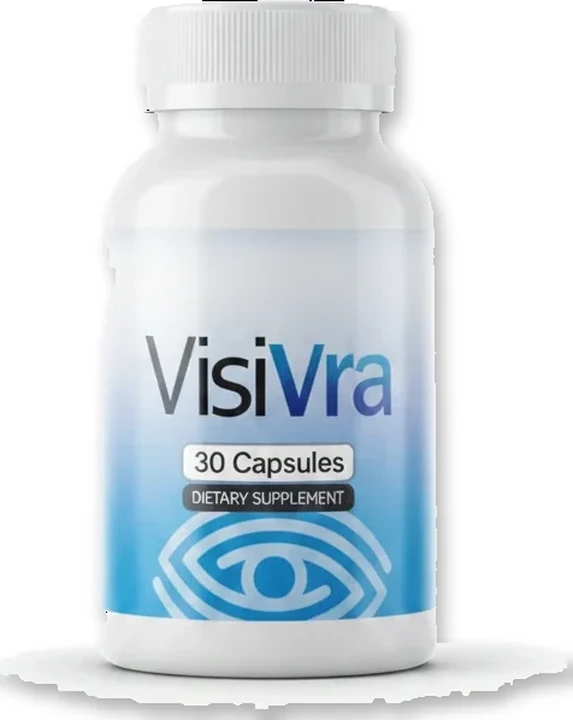
Visivra is built on lutein, zeaxanthin, bilberry, beta-carotene, zinc and antioxidant vitamins. Read the full ingredient breakdown, including who should not take it, before you decide.
Get Offer