Lutein vs Zeaxanthin: What Each One Actually Does in the Retina
Quick Answer: What Is the Difference Between Lutein and Zeaxanthin?
They are chemical near-twins that sit in different places — zeaxanthin concentrates at the dead centre of the macula, lutein dominates the retina around it — and a normal diet supplies roughly five times more lutein than zeaxanthin, which is why formulas add zeaxanthin back rather than more lutein. There is also a third carotenoid, meso-zeaxanthin, that your retina appears to manufacture from lutein and that almost no consumer article mentions.
- Position: zeaxanthin and meso-zeaxanthin dominate the foveal centre; lutein increases with distance from it.
- Diet: average US intake of both combined is under 2 mg a day, mostly lutein.
- The reference ratio: 10 mg lutein and 2 mg zeaxanthin — the AREDS2 trial arm, not an optimised formula.
The chemistry, in one paragraph
Lutein and zeaxanthin are xanthophylls: oxygen-containing carotenoids. They share an identical molecular formula, C40H56O2, and differ only in the position of one double bond in one of the two end rings. In zeaxanthin that bond is conjugated with the long central chain, giving zeaxanthin eleven conjugated double bonds against lutein's ten. That is the entire structural difference, and it is enough to change how each molecule absorbs light, how it orients inside a cell membrane, and — the part that matters for anyone reading a label — where in the retina it ends up.
Neither can be synthesised by the human body. Both must arrive from food, cross the gut wall with dietary fat, and be selectively pulled into retinal tissue. That selectivity is where the two part company.
Lutein vs zeaxanthin vs meso-zeaxanthin, side by side
No competing page on this query publishes a comparison table. Here is one.
| Property | Lutein | Zeaxanthin | Meso-zeaxanthin |
|---|---|---|---|
| Where it sits in the retina | Increases with radial distance from the fovea; dominates the peripheral retina | Concentrated in the central macula | Highest at the foveal centre; decreases outward |
| Main dietary sources | Kale, spinach and other dark leafy greens; marigold (Tagetes erecta) extract in supplements | Corn and corn products, orange peppers, cooked egg yolk, goji berries | No meaningful source in the ordinary human diet |
| Typical Western intake | Combined lutein + zeaxanthin averaged 1.58 mg/day in US males and 1.76 mg/day in females (NHANES 2013–14), with lutein the larger share | Not applicable — not meaningfully consumed | |
| Can the body make it? | No | No | Yes — the retina appears to convert lutein into meso-zeaxanthin, primarily in the macula |
| AREDS2 trial dose | 10 mg/day | 2 mg/day | Not included in AREDS2 |
| What an asterisk in the %DV column means | "Daily Value not established." None of these three carotenoids has an FDA Daily Value, so a compliant Supplement Facts panel shows an asterisk rather than a percentage. The asterisk is normal. A missing milligram figure is the problem. | ||
Retinal distribution rows are drawn from Bone RA, Landrum JT, et al., Exp Eye Res 1997;64(2):211–218 (PMID 9176055), which mapped the stereoisomers across three concentric retinal zones. Intake figures are from Li X, Holt RR, Keen CL, et al., Nutrition Reviews 2023;81(6):670–683.
The ratio problem nobody explains
Here is the fact that makes the pairing make sense, and that we could not find stated on a single page ranking for this query.
Your diet delivers far more lutein than zeaxanthin. Leafy greens dominate carotenoid intake in most Western diets and they are lutein-heavy; zeaxanthin-rich foods (corn, orange peppers, egg yolk, goji berries) are eaten in much smaller quantities. The commonly reported dietary ratio is around five parts lutein to one part zeaxanthin.
Your fovea has the opposite preference. Li and colleagues, reviewing the distribution data in Nutrition Reviews in 2023, report that in the central fovea the combined concentration of zeaxanthin and meso-zeaxanthin exceeds lutein at about 2.4 to 1. Bone's 1997 mapping found the same directional pattern: lutein's share rises as you move outward from the fovea, and meso-zeaxanthin's falls.
So the tissue that does your sharpest seeing wants proportionally more zeaxanthin than your plate is providing. That mismatch — not any claim that zeaxanthin is superior — is the actual argument for a formula that adds zeaxanthin alongside lutein instead of simply raising the lutein dose.
The two ratios worth holding in your head
On your plate: roughly 5 parts lutein to 1 part zeaxanthin, and under 2 mg a day of both combined in the average US diet.
At your fovea: zeaxanthin plus meso-zeaxanthin outnumber lutein by about 2.4 to 1.
On the label: 10 mg to 2 mg — which is a five-to-one supplement ratio layered on top of a five-to-one dietary one. Nobody engineered that. It is what one trial happened to use.
Meso-zeaxanthin: the third carotenoid
Meso-zeaxanthin is the one every competing article skips, and it is the most interesting of the three. It is a stereoisomer of zeaxanthin — the same molecule, mirrored at one carbon. In 1997 Bone, Landrum and colleagues mapped the carotenoid stereoisomers across the human retina and described meso-zeaxanthin explicitly as a non-dietary carotenoid. Their proposed explanation, still the standard one, is that lutein and zeaxanthin are transported into the retina in roughly the proportions found in a person's blood serum, and that some of the lutein is then converted into meso-zeaxanthin, primarily within the macula, by a mechanism that appears less developed in infants than in adults.
If that is right, meso-zeaxanthin is not something you eat. It is something your retina makes out of the lutein you eat — which is a reasonable argument for lutein being the more foundational of the two dietary carotenoids, whatever the foveal ratios say.
Does adding it to a supplement help? The honest answer is "the pooled data lean yes, and no trial has isolated it." A 2016 meta-analysis by Ma and colleagues in Nutrients pooled 20 randomised controlled trials covering 938 people with AMD and 826 healthy subjects, at doses from 0 to 20 mg/day over 8 weeks to 24 months. It found a greater increase in macular pigment optical density in trials whose supplement included meso-zeaxanthin than in those without it. That is an observation across studies that differed in dose, duration and population, not a randomised head-to-head, and it should be weighted accordingly. We go through the case for and against the third carotenoid in meso-zeaxanthin, the third macular carotenoid.
Where the 10 mg / 2 mg split came from
Almost every eye supplement on the market uses 10 mg lutein and 2 mg zeaxanthin, or advertises itself against those numbers. The origin is a single trial.
The Age-Related Eye Disease Study 2, published in JAMA in 2013, randomised 4,203 participants aged 50 to 85 who were at risk of progression to advanced AMD. One of the things it tested was adding 10 mg lutein plus 2 mg zeaxanthin to the original AREDS supplement. That combined amount is the whole provenance of the ratio.
It is important to be blunt about what that means: 10:2 is an arm of a trial, not an optimised biological ratio. The investigators did not test 8:4, or 12:2, or 10:2 against 10:0. They tested one combination in one at-risk population and reported what happened. Nobody has since run the dose-ranging study that would tell you whether a different split works better, and until somebody does, every label reproducing those numbers is reproducing a study design decision from 2013.
What AREDS2 found about outcomes — and the important caveat that it enrolled people who already had significant macular changes — is a separate discussion, and we cover it in our review of the evidence on lutein and zeaxanthin for eye health rather than re-arguing it here.
Check the split on the panel
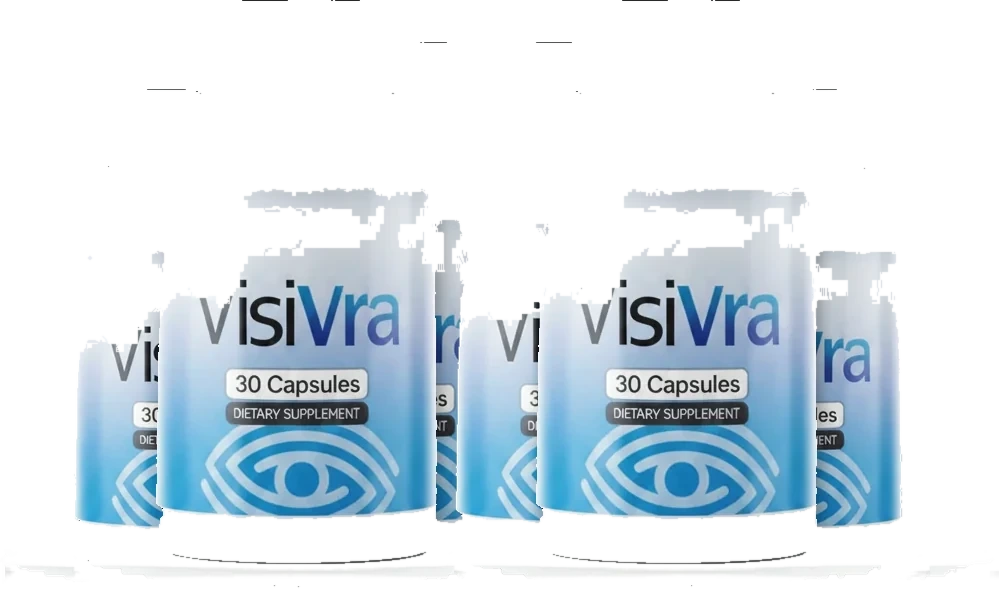
Visivra pairs lutein and zeaxanthin with bilberry, beta-carotene, zinc and antioxidant vitamins in one daily capsule. We do not publish milligram figures we have not verified — read the Supplement Facts panel and compare it to the 10 mg and 2 mg reference amounts yourself.
Get OfferDo you actually need both?
On the current evidence, taking both is the defensible choice, but not because zeaxanthin has been proven to add anything on its own — simply because the pair together is what the large trials tested, and no trial has isolated 2 mg of zeaxanthin against a placebo to tell us otherwise.
Three things sit behind that sentence:
- The trials tested combinations. AREDS2 used lutein and zeaxanthin together. Hammond's 12-month photostress study used 10 mg plus 2 mg together. Where a trial used lutein alone — as Ma's 12-week contrast sensitivity study did — it still found effects on contrast sensitivity with no zeaxanthin present.
- The mismatch argument is anatomical, not clinical. "The fovea is zeaxanthin-dominant and your diet is lutein-dominant" is a good reason to think the pairing is sensible. It is not evidence that the pairing outperforms lutein alone, because that comparison has not been run.
- Meso-zeaxanthin muddies it further. If your retina converts lutein into meso-zeaxanthin, lutein intake is already feeding the central-macula pool indirectly, which weakens rather than strengthens the anatomical case for supplementing zeaxanthin.
The practical upshot is narrower than the marketing suggests. Both carotenoids on a panel with real milligram figures is a good sign. A label boasting that its zeaxanthin is the important one is going beyond what anyone has demonstrated. Whether you need a panel at all, or can reach the same intake from greens and egg yolk, is weighed up in lutein from foods versus a supplement.
What the evidence does not show
Four limits, stated plainly.
No isolation trial. We could not find a placebo-controlled trial testing 2 mg zeaxanthin alone. Any claim that zeaxanthin specifically does something lutein does not is, at present, an inference from where the molecules sit rather than a result from a trial.
Distribution is not function. Knowing that zeaxanthin concentrates at the fovea tells you the retina sorts these molecules deliberately. It does not tell you that raising foveal zeaxanthin improves how anyone sees. The functional endpoints that have moved in trials — contrast sensitivity, photostress recovery — were measured after combined supplementation, and are covered in our piece on how long lutein takes to work.
The meso-zeaxanthin conversion pathway is a proposal. Bone and colleagues proposed the lutein-to-meso-zeaxanthin conversion to account for what they measured. It is the accepted explanation, but "proposed pathway that fits the data" and "demonstrated enzymatic mechanism" are not the same claim, and the enzymes involved are still not fully characterised.
None of this is about disease. Nothing on this page describes preventing, treating or slowing any eye condition. These are dietary carotenoids in a dietary supplement. If you have symptoms — distortion, a dark central patch, sudden floaters or flashes — that is an eye examination, not a label comparison. You can read our full ingredient-by-ingredient breakdown of Visivra for how these carotenoids sit alongside the rest of the formula.
Medical note: this article is general information about published research, not medical advice. Dietary supplements are not intended to diagnose, treat, cure or prevent any disease. Speak to a qualified healthcare professional before starting any supplement, particularly if you smoke, have recently quit, are pregnant or nursing, or take prescription medication.
Frequently asked questions
What is the difference between lutein and zeaxanthin?
They are structural isomers with the same chemical formula arranged slightly differently, and that small difference changes where each one settles. Zeaxanthin concentrates at the dead centre of the macula, the fovea, while lutein dominates the retina surrounding it. Zeaxanthin also carries one more conjugated double bond in its ring system, which changes how it absorbs light.
Is lutein or zeaxanthin better for your eyes?
Neither, on the current evidence. We are not aware of any trial that tested 2 mg of zeaxanthin alone against a placebo, so there is no head to head comparison from which to declare a winner. What the large trials actually tested was the pair together, which is why formulas pair them rather than choosing one.
What is meso-zeaxanthin and do I need it?
Meso-zeaxanthin is a third macular carotenoid with no meaningful source in the human diet. Bone and colleagues proposed in 1997 that the retina produces it by converting lutein, mainly within the macula. A 2016 meta analysis of 20 randomised trials found a greater rise in macular pigment in trials whose supplement contained meso-zeaxanthin, but that is a pooled observation across different studies rather than a direct comparison.
Why is the ratio 10 mg lutein to 2 mg zeaxanthin?
Because that is the amount AREDS2 tested, not because 5 to 1 was calculated as biologically optimal. The Age-Related Eye Disease Study 2, published in JAMA in 2013 with 4,203 participants, used 10 mg lutein and 2 mg zeaxanthin as a single combined arm. Every label that copies those numbers is copying a trial arm.
Can I get enough zeaxanthin from food?
It is harder than getting lutein. United States intake surveys put average combined lutein and zeaxanthin intake at under 2 mg a day, and lutein makes up most of that, because leafy greens are far more common in the diet than the main zeaxanthin foods, which are corn, orange peppers, egg yolk and goji berries.
Scientific references
- Bone RA, Landrum JT, Friedes LM, et al. Distribution of lutein and zeaxanthin stereoisomers in the human retina. Exp Eye Res. 1997;64(2):211–218. PMID 9176055
- Age-Related Eye Disease Study 2 Research Group. Lutein + zeaxanthin and omega-3 fatty acids for age-related macular degeneration: the AREDS2 randomized clinical trial. JAMA. 2013;309(19):2005–15. PMID 23644932
- Ma L, Liu R, Du JH, Liu T, Wu SS, Liu XH. Lutein, zeaxanthin and meso-zeaxanthin supplementation associated with macular pigment optical density. Nutrients. 2016;8(7):426. PMID 27420092
- Li X, Holt RR, Keen CL, Morse LS, Zivkovic AM, Yiu G, Hackman RM. Potential roles of dietary zeaxanthin and lutein in macular health and function. Nutr Rev. 2023;81(6):670–683. doi:10.1093/nutrit/nuac076
- Ma L, Lin XM, Zou ZY, Xu XR, Li Y, Xu R. A 12-week lutein supplementation improves visual function in Chinese people with long-term computer display light exposure. Br J Nutr. 2009;102(2):186–90. PMID 19586568
- National Eye Institute — Age-Related Eye Disease Studies (AREDS/AREDS2)
See how the pairing is put together
Lutein and zeaxanthin alongside bilberry, beta-carotene, zinc and antioxidant vitamins, sold through the official store with a 60-day money-back guarantee.
Get Offer