Take Eye Supplements With Food for Better Absorption
Quick Answer: Should You Take Eye Supplements With Food?
Yes. Lutein, zeaxanthin, beta-carotene and the fat-soluble vitamins A and E absorb far better with a meal that contains some fat, because fat triggers the bile and droplet formation they need to cross the gut wall. Studies show carotenoid uptake can rise several-fold with fat present. A little olive oil, egg, nuts or avocado is enough.
- Why: these nutrients are fat-soluble and need dietary fat to dissolve and absorb.
- How much fat: only a few grams — not a high-fat meal.
- What matters most: consistency over months, not the time of day.
Of all the questions about eye supplements, this one has the clearest, most actionable answer — and it costs nothing. How you take a lutein-and-zeaxanthin formula genuinely changes how much of it your body absorbs, and the deciding factor is simple: is there fat in your stomach when you swallow the capsule? Get this right and you get more out of every bottle. Get it wrong and a meaningful fraction of what you paid for passes straight through. Here is the biology, the evidence, and the two-line routine that captures the benefit.
Why fat matters: these nutrients are fat-soluble
Nutrients divide broadly into two camps by how they dissolve. Water-soluble ones, like vitamin C and the B vitamins, move easily in the watery environment of the gut and absorb reasonably well whether or not you have eaten. Fat-soluble ones are different: they dissolve in fat, not water, and they need fat present to be absorbed efficiently.
Almost everything that makes an eye supplement worth taking sits in the fat-soluble camp. Lutein and zeaxanthin are carotenoids — fat-soluble pigments. Beta-carotene is a fat-soluble carotenoid too. Astaxanthin, found in some eye formulas, is another. Vitamin A and vitamin E are the classic fat-soluble vitamins. The mechanism by which they cross from your gut into your bloodstream depends on dietary fat at several steps.
When you eat fat, your gallbladder releases bile, and the fat is emulsified into tiny droplets called micelles. Fat-soluble nutrients dissolve into these droplets, which ferry them to the surface of the intestinal cells where they can be taken up. No fat means little bile release and few micelles, which leaves the carotenoids with no efficient vehicle to reach the gut wall. That is the entire reason a meal changes the outcome so dramatically.
What the absorption studies actually show
This is not theory; it has been measured directly, and the effect sizes are striking. In a well-known study, researchers added avocado or avocado oil — both sources of fat — to a salad and measured how much carotenoid people absorbed compared with the same salad eaten fat-free. Carotenoid absorption rose several-fold when the fat was present. Lutein absorption in particular increased dramatically with added fat.
Another study made the point from the opposite direction: people eating a salad with a fat-free dressing absorbed a negligible amount of carotenoids — essentially close to none — while the same salad with a fat-containing dressing delivered a substantial amount. The fat was not merely helpful; without it, absorption of these pigments nearly failed. The pattern repeats across the carotenoid literature: fat in the meal is one of the strongest single determinants of how much of these nutrients you actually take up.
The same logic extends to supplements. A lutein or beta-carotene capsule taken with water on an empty stomach faces the same absorption bottleneck as a fat-free salad. Take it with a meal that has some fat, and you recreate the conditions under which these nutrients absorb well. The food matrix matters too — egg yolk, for instance, delivers lutein in a form the body absorbs particularly efficiently — but the headline lever you control with a capsule is simply whether fat is present.
One capsule daily, with a meal
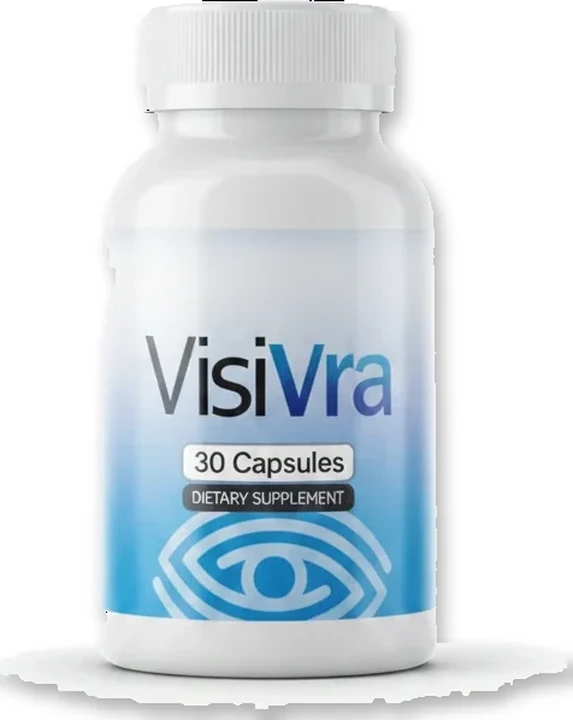
Visivra is designed to be taken once a day with food — the simplest way to help your body absorb its fat-soluble carotenoids and vitamins. Check the label and take it consistently.
Get OfferHow much fat is actually needed?
Here the good news is that you do not need much. The research suggests that only a modest amount of fat in the same meal — on the order of a few grams — is enough to substantially improve carotenoid absorption. This is not a licence, or a requirement, to eat a heavy, high-fat meal every time you take your supplement. A little goes a long way.
Practical sources of that small amount of fat are everywhere in a normal diet:
- A drizzle of olive oil or a vinaigrette on a salad or vegetables.
- A handful of nuts or seeds.
- Some avocado.
- Eggs — which also happen to be an excellent lutein source in their own right.
- Full-fat or whole-milk yoghurt, cheese, or a splash of whole milk.
- Oily fish, or any meal cooked with a normal amount of oil or butter.
In other words, most ordinary meals already contain enough fat to do the job. The failure mode to avoid is the specific one: swallowing a fat-soluble eye capsule with just water first thing, or with a deliberately fat-free snack, and getting less than you could have.
Which ingredients in an eye formula actually need fat
Not every nutrient in a typical eye supplement depends on dietary fat, so it is worth knowing which parts of the label the with-food rule really applies to. A formula like the AREDS-style ones is a mix of both types.
Fat-soluble — take with fat: lutein, zeaxanthin, meso-zeaxanthin, beta-carotene, astaxanthin, and the vitamins A and E. These are the ingredients whose absorption genuinely rises when fat is present, and they are also the ones carrying most of the evidence in eye research, so this is where the with-food habit pays off most.
Not fat-dependent: vitamin C is water-soluble and absorbs fine regardless of fat, and zinc and copper are minerals whose absorption is not driven by dietary fat in the same way. Zinc is actually better known for the opposite kind of interaction — large amounts can cause nausea on an empty stomach and can compete with copper, which is why AREDS-style formulas pair zinc with a little copper. Taking it with food tends to be gentler on the stomach regardless.
The convenient conclusion is that the single rule — take the whole capsule with a meal — serves every ingredient at once. It maximises absorption of the fat-soluble carotenoids and vitamins, and it is the easiest-on-the-stomach way to take the zinc. There is no ingredient in a standard eye formula that you would want to take fasted instead, so there is no trade-off to manage: one capsule, one meal, done.
Morning or evening? Consistency beats the clock
People often ask whether there is an optimal time of day. For eye carotenoids, there is no strong evidence that morning versus evening changes how well the nutrients work. Unlike, say, a stimulant that would disrupt sleep at night, lutein and zeaxanthin have no timing sensitivity that the research has flagged as meaningful.
What overwhelmingly matters instead is consistency. Macular carotenoids build up in the retina slowly, over months of daily intake, and the benefit seen in trials came from sustained supplementation, not from any single well-timed dose. That reframes the real question. It is not "what is the best time?" but "which meal am I most likely to remember, every single day, for the next several months?" If that is breakfast with eggs, take it then. If it is dinner cooked with oil, take it then. The right time is the one that turns it into an automatic habit.
This connects to a point we make often: judging an eye supplement after a couple of weeks tells you nothing, because the pigment has barely begun to change. Our piece on how long lutein takes to work lays out that timeline, and it is precisely why building an unbreakable daily routine — anchored to a meal with fat — is the single most important thing you can do.
A simple, evidence-based routine
Pulling it together, here is the whole protocol, and it is deliberately short:
Pair it with a fat-containing meal
Take your eye supplement with food that has at least a few grams of fat — eggs, oil, nuts, avocado, dairy. This is the lever that most affects absorption of the carotenoids and fat-soluble vitamins.
Pick one fixed meal and stick to it
Choose the meal you never skip and always take it then. The exact time of day does not matter; never missing does.
Give it months, not days
Macular pigment builds slowly. A realistic window to judge anything is 8 to 12 weeks of consistent daily use, with the trial-grade changes measured over a year.
None of this replaces reading the label. Follow the directions on your specific product, and if you take other fat-soluble supplements — a separate vitamin D, omega-3 fish oil, or a multivitamin — taking them together with the same meal is a sensible way to absorb all of them well. If you are unsure how a supplement fits with your medication or health situation, that is a conversation for a doctor or pharmacist.
The honest bottom line
Taking a fat-soluble eye supplement with food that contains fat is one of the few supplement tips that is both strongly evidence-based and completely free. It will not turn a weak formula into a strong one, and it will not deliver overnight vision changes — nothing does. But it does ensure that the lutein, zeaxanthin and vitamins you are paying for actually reach your bloodstream rather than passing through. Combined with genuine day-after-day consistency, it is how you give a formula its fair chance to do whatever it is going to do.
Related reading
- Gummies vs Capsules for Eye Vitamins
- Zinc in Eye Supplements: How Much Is Enough?
- Omega-3 and Dry Eye: What the Research Shows
- How Eye Supplement Doses Vary Between Products
Frequently asked questions
Should eye vitamins be taken with food?
Yes. Lutein, zeaxanthin, beta-carotene and the fat-soluble vitamins A and E all absorb far better when taken with a meal that contains some fat. Fat triggers the release of bile and forms the tiny droplets these nutrients need to cross the gut wall. Studies show carotenoid uptake can rise several-fold when fat is present versus a fat-free meal. Taking an eye supplement with food is one of the simplest ways to get more value from it.
How much fat is needed to absorb carotenoids?
Not much. Research suggests that only a small amount of fat in the same meal, on the order of a few grams, is enough to substantially improve carotenoid absorption. You do not need a high-fat meal. A little olive oil on a salad, a handful of nuts, some avocado, eggs, full-fat yoghurt or a splash of whole milk is plenty. The practical point is simply to avoid taking a fat-soluble eye supplement with nothing, or with a completely fat-free snack.
Is morning or evening better for eye supplements?
There is no strong evidence that a specific time of day improves how well eye carotenoids work. What matters far more is that you take it with a meal containing fat and that you take it consistently, day after day, for months. Pick whichever meal you are most likely to remember, breakfast with eggs or dinner with some oil, and make it a fixed habit. Consistency over months beats optimising the clock.
Does taking supplements on an empty stomach waste them?
For fat-soluble ingredients, largely yes, you leave absorption on the table. Taking lutein, zeaxanthin or beta-carotene with water on an empty stomach means little fat is present to help them dissolve and cross the gut wall, so a meaningful fraction can pass through unabsorbed. It is not harmful, but it is inefficient. Since these supplements are taken for months, the cumulative difference between with-fat and fasted dosing is worth capturing by simply pairing the capsule with a meal.
Medical note: this article is general information, not medical advice. Follow the directions on your product label, and speak to a doctor or pharmacist before combining supplements if you are pregnant, nursing, taking medication or managing a health condition. Dietary supplements are not intended to diagnose, treat, cure or prevent any disease.
Scientific references
- Unlu NZ, Bohn T, Clinton SK, Schwartz SJ. Carotenoid absorption from salad and salsa by humans is enhanced by the addition of avocado or avocado oil. J Nutr. 2005;135(3):431–6. PMID 15735074.
- Brown MJ, Ferruzzi MG, Nguyen ML, et al. Carotenoid bioavailability is higher from salads ingested with full-fat than with fat-reduced salad dressings as measured with electrochemical detection. Am J Clin Nutr. 2004;80(2):396–403. PMID 15277161.
- Roodenburg AJ, Leenen R, van het Hof KH, Weststrate JA, Tijburg LB. Amount of fat in the diet affects bioavailability of lutein esters but not of alpha-carotene, beta-carotene, and vitamin E in humans. Am J Clin Nutr. 2000;71(5):1187–93. PMID 10799382.
- NIH Office of Dietary Supplements — Vitamin A and carotenoids fact sheet.
- NIH Office of Dietary Supplements — Vitamin E fact sheet.
- American Academy of Ophthalmology — Diet and Nutrition for Your Eyes.
See how Visivra puts this together
Lutein and zeaxanthin with bilberry, zinc and antioxidant vitamins in one daily capsule — designed to be taken with food. Ordered through the official store, with the manufacturer's 60-day money-back guarantee.
Get Offer