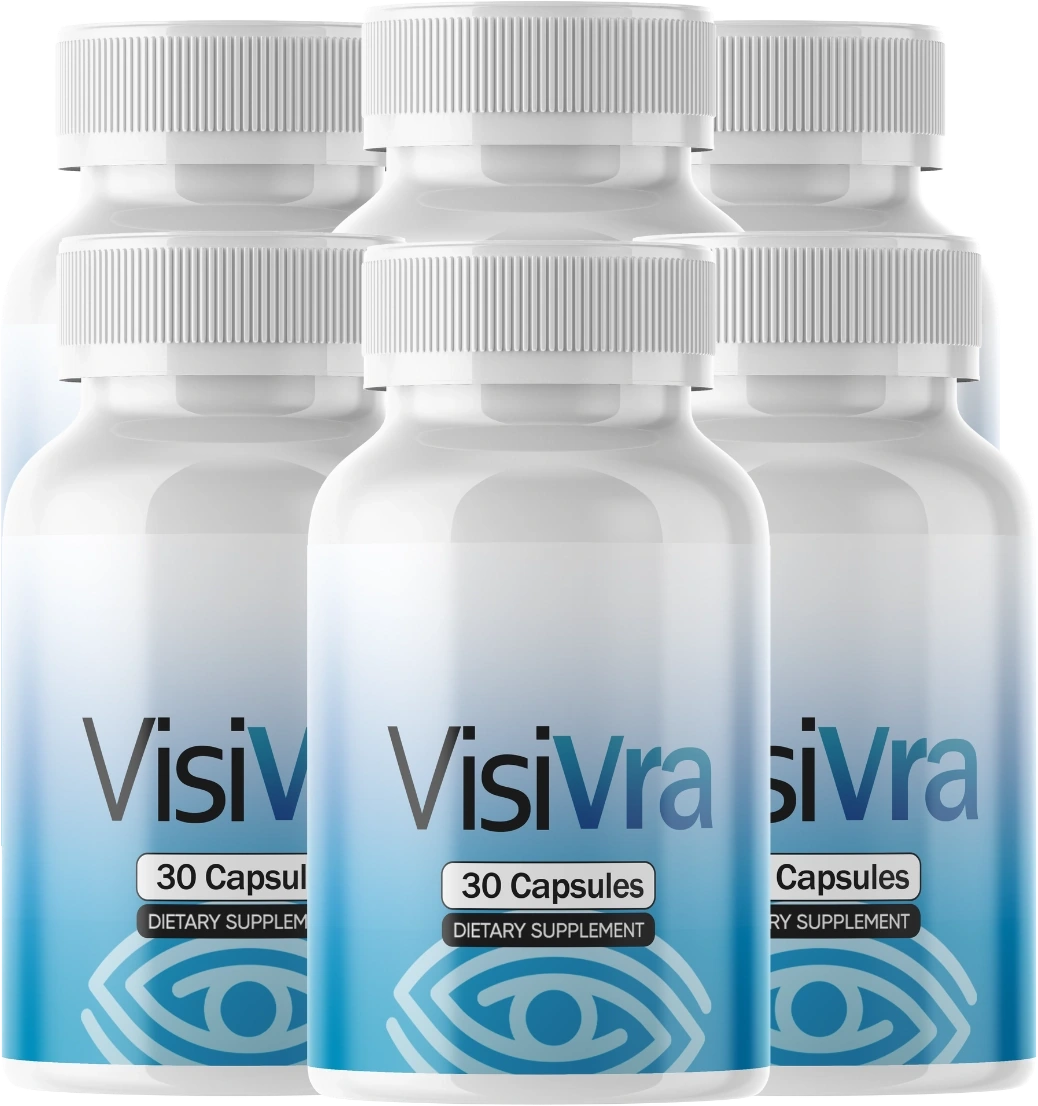
Visivra Official Website › Ingredients
IngredientsVisivra Ingredients: The Six Actives Named On The Bottle
Visivra names six actives and prints an amount for none of them.
They are lutein, zeaxanthin, bilberry extract, astaxanthin, zinc and vitamin A. Five have human eye trials behind them. This page takes each one in the order the vendor's own artwork sets them out, says what it is, and prints the amount the published trials used beside it.
One capsule, six names, and no quantities. Here is what each of the six is, and what the research actually gave people.
The six Visivra actives at a glance
Five of the six carry human trial evidence in an eye context. Here they are in the order the vendor's own artwork sets them out.
| Named active | What it is | Where the human eye evidence comes from |
|---|---|---|
| Lutein | A xanthophyll carotenoid from marigold | AREDS2 and a run of macular pigment trials |
| Zeaxanthin | The second macular carotenoid | Always tested beside lutein, never alone |
| Bilberry Extract | An anthocyanin-rich European berry | Three small Japanese trials on accommodation and eye fatigue |
| Astaxanthin | A red carotenoid from microalgae | One 2025 randomised trial, in children |
| Zinc | An essential trace mineral | The original AREDS formula, at a high dose with copper |
| Vitamin A | A fat-soluble vitamin, form unstated | Essential for vision; no eye supplement trial at a stated dose |
The right-hand column says where the evidence comes from, not what it found. Each of the six sections below carries that.
Lutein and zeaxanthin, the two Visivra ingredients the category rests on
These two travel together and it is worth understanding why before anything else on the label makes sense. The macula, the few square millimetres of retina that does your reading and your face recognition, is yellow. It is yellow because it concentrates exactly three carotenoids: lutein, zeaxanthin and meso-zeaxanthin. The human body manufactures none of them. Every molecule in that yellow patch arrived through food and was then actively transported there.
That pigment does two physical jobs. It absorbs short-wavelength light before it reaches the photoreceptors, and it is an antioxidant in a tissue with one of the highest oxygen demands in the body. Both are mechanisms rather than outcomes, and mechanisms are where supplement marketing usually stops. The outcome research is narrower.
AREDS2 is the trial that put these two on shelves. It gave lutein 10 mg and zeaxanthin 2 mg a day, for a median of five years, to people who already had intermediate age-related macular degeneration. In the primary analysis lutein and zeaxanthin did not significantly reduce progression against placebo; in the pre-specified secondary analysis they did outperform beta carotene, which is why the formula was changed. That is the honest shape of the headline result, and it is a narrower claim than most eye supplement copy implies.
In eyes without disease the picture is different again. A one-year randomised trial gave lutein 10 mg and zeaxanthin 2 mg a day for one year, 115 young adults and measured macular pigment, glare disability, photostress recovery and chromatic contrast in young healthy adults. Pigment rose and some visual measures moved with it. A later meta-analysis of macular pigment against visual function found the association held across studies, most strongly for glare and contrast rather than for acuity.
A 2025 trial in heavy screen users is the closest thing to this product's own buyer: lutein 10 mg and zeaxanthin 2 mg twice a day for four months, in adults on screens eight hours a day. Note the amount. It is twice the AREDS2 figure, because it was given twice daily.
Bilberry extract, the Visivra ingredient with the myth attached
Bilberry is the European cousin of the blueberry, darker all the way through, and its anthocyanins are the reason it appears on eye labels. It also carries the most persistent story in this category: that RAF night-fighter pilots ate bilberry jam to see in the dark. The controlled work that followed the story did not support it, and nothing on this site claims night vision as a benefit.
What the modern trials actually measured is accommodation and eye fatigue. The ciliary-muscle trial gave 240 mg of standardised bilberry extract once a day for twelve weeks to 109 adults aged 20 to 60 and measured the tonic state of the ciliary muscle after a screen task. The muscle that changes the shape of your lens stays partly contracted after hours of close work, which is what a tired near-focus feels like from the inside. That measure improved at weeks 8 and 12.
The screen-worker trial ran 480 mg of bilberry extract a day for eight weeks in office workers screened for low critical flicker fusion and near-point accommodation. Critical flicker fusion, a proxy for how fatigued the visual system is, held up better after a screen load in the bilberry group, and five of the subjective fatigue symptoms improved.
The third trial used 400 mg a day of fermented bilberry extract for one month of a fermented extract and measured contrast sensitivity in short-sighted eyes over a month. Three trials, three amounts, three different outcome measures, all of them small. NCCIH summarises the state of it fairly: promising in places, thin overall.
Astaxanthin, the newest Visivra ingredient and the one with a single trial
Astaxanthin is the pigment that turns salmon flesh and flamingo feathers pink. Commercially it is grown in the microalga Haematococcus pluvialis, which makes it under stress. Structurally it sits at the far end of the carotenoid family: the same long conjugated backbone as lutein, with extra oxygen groups at both ends that let the molecule span a cell membrane rather than sit inside it.
That structural point is the whole of the mechanism argument, and it is the kind of argument that sounds more conclusive than it is. What matters for a buyer is the human eye evidence, and in this ingredient's case that is one recent well-conducted trial.
The 2025 digital eye strain trial gave 4 mg of astaxanthin a day for eighty-four days, in children aged 10 to 14. Sixty-four children who spent four hours a day or more on screens, all with mild to moderate computer vision syndrome scores, randomised double-blind against placebo. The symptom questionnaire improved by about 20% more than placebo, a visual fatigue scale by 27%, and stereopsis and pupillary light reflex both moved.
Two things to hold on to. That is a real result, properly run and registered. And its participants were between ten and fourteen years old, which is not the buyer this bottle is sold to. A 2026 review of carotenoids in eye disease is a reasonable place to see how thin the adult evidence still is.
Zinc, the one Visivra ingredient with a ceiling worth knowing
Zinc is an essential trace mineral and the retina holds a lot of it, concentrated in the retinal pigment epithelium. A review of zinc in the eye sets out why: it is a cofactor for enzymes in the visual cycle and in the antioxidant machinery immediately behind the photoreceptors.
The original AREDS trial is where the eye-supplement zinc habit comes from, and its formula used zinc 80 mg as zinc oxide WITH copper 2 mg as cupric oxide. Both halves of that sentence matter. The zinc was very high, and the copper was there on purpose: zinc and copper compete for the same transport route out of the gut, so months of high zinc alone quietly drives copper down. AREDS2 later tested a 25 mg zinc arm and found no clear difference in progression, which suggests the original amount was higher than it needed to be.
The consequence of getting this wrong is not theoretical. A 2026 case report describes copper deficiency myelopathy arising from zinc intake, and it joins a long line of similar reports. It is a real, if uncommon, outcome of a supplement habit nobody audited.
the Institute of Medicine’s zinc chapter is the primary source for the adult tolerable upper intake level, and it is worth reading if you take anything else containing zinc. The Visivra artwork names zinc without a figure and without naming copper, so a buyer cannot tell from the bottle which end of that range they are in.
Vitamin A on the Visivra label, where the form matters more than the number
Vitamin A is the one ingredient here with an unarguable role in vision. Retinal, the aldehyde form, is the molecule that sits inside rhodopsin and physically changes shape when a photon hits it. Without it a photoreceptor cannot signal at all, which is why deficiency causes night blindness before anything else.
That is also why it is the ingredient to read most carefully, because vitamin A on a label can mean two chemically different things. Preformed vitamin A, which is retinol or retinyl palmitate, is absorbed directly and stored in the liver, and it has a genuine upper limit. Provitamin A carotenoids, principally beta carotene, are converted on demand and the body simply stops converting when it has enough.
The CARET trial gave beta carotene 30 mg plus retinyl palmitate 25,000 IU a day, in smokers and asbestos-exposed workers and was stopped early: more lung cancer, not less. The ATBC trial had already found the same thing with beta carotene 20 mg a day, in male smokers. Those two results are the reason AREDS2 removed beta carotene from the eye formula altogether.
At the other end, a 2026 systematic review of hypervitaminosis A collects what chronic excess of the preformed form does: headache, bone pain, hair and skin changes, and liver injury. the Institute of Medicine’s vitamin A chapter is the source for the adult upper limit on preformed vitamin A.
For completeness, the one place a large vitamin A dose is used deliberately in eye medicine is retinitis pigmentosa, where a four-year trial ran lutein 12 mg a day for four years, alongside vitamin A 15,000 IU a day. The Cochrane review of that practice is cautious about it. None of that is what a general eye supplement is for, and it is included here only so the scale is clear.
What the Visivra list leaves out, and whether it matters
Three absences are worth naming once, in the section whose job that is.
Copper
Named beside the zinc in AREDS and in most AREDS-style formulas on the shelf. Its absence from this artwork is only a problem if the zinc amount is high, and the label does not say. It is the first question to put to the order desk.
Meso-zeaxanthin
The third macular carotenoid, made in the retina from lutein. Some formulas add it directly. Its absence is defensible: the conversion route exists and the trial evidence for adding it is thinner than for the other two.
Omega-3 fatty acids
AREDS2 tested DHA and EPA alongside the carotenoids and found no benefit for progression, so leaving them out is arguably the evidence-led choice rather than a gap.
A capsule shell declaration
The front panel names no shell material while the artwork carries a vegetarian mark. Those two need reconciling by the seller before anyone relies on the mark.
Who publishes this Visivra website?
- Age-Related Eye Disease Study 2 (AREDS2) Research Group. Lutein + zeaxanthin and omega-3 fatty acids for age-related macular degeneration: the Age-Related Eye Disease Study 2 (AREDS2) randomized clinical trial. JAMA. 2013;309(19):2005-15. PMID 23644932. https://pubmed.ncbi.nlm.nih.gov/23644932/
- Chew EY, Clemons TE, Sangiovanni JP, et al. Secondary analyses of the effects of lutein/zeaxanthin on age-related macular degeneration progression: AREDS2 report No. 3. JAMA Ophthalmol. 2014;132(2):142-9. PMID 24310343. https://pubmed.ncbi.nlm.nih.gov/24310343/
- Hammond BR, Fletcher LM, Roos F, et al. A double-blind, placebo-controlled study on the effects of lutein and zeaxanthin on photostress recovery, glare disability, and chromatic contrast. Invest Ophthalmol Vis Sci. 2014;55(12):8583-9. PMID 25468896. https://pubmed.ncbi.nlm.nih.gov/25468896/
- Johnson EJ, Avendano EE, Mohn ES, et al. The association between macular pigment optical density and visual function outcomes: a systematic review and meta-analysis. Eye (Lond). 2021;35(6):1620-1628. PMID 32792595. https://pubmed.ncbi.nlm.nih.gov/32792595/
- Bharadwaj VG, Mb T, Hv A, et al. Beneficial Effects of a Lutein-Zeaxanthin Complex on Macular Pigment Optical Density Levels of Healthy Individuals With Prolonged Screen Time. Cureus. 2025;17(2):e79481. PMID 40135032. https://pubmed.ncbi.nlm.nih.gov/40135032/
- Kosehira M, Machida N, Kitaichi N. A 12-Week-Long Intake of Bilberry Extract (Vaccinium myrtillus L.) Improved Objective Findings of Ciliary Muscle Contraction of the Eye: A Randomized, Double-Blind, Placebo-Controlled, Parallel-Group Comparison Trial. Nutrients. 2020;12(3). PMID 32106548. https://pubmed.ncbi.nlm.nih.gov/32106548/
- Ozawa Y, Kawashima M, Inoue S, et al. Bilberry extract supplementation for preventing eye fatigue in video display terminal workers. J Nutr Health Aging. 2015;19(5):548-54. PMID 25923485. https://pubmed.ncbi.nlm.nih.gov/25923485/
- Kamiya K, Kobashi H, Fujiwara K, et al. Effect of fermented bilberry extracts on visual outcomes in eyes with myopia: a prospective, randomized, placebo-controlled study. J Ocul Pharmacol Ther. 2013;29(3):356-9. PMID 23113643. https://pubmed.ncbi.nlm.nih.gov/23113643/
- National Center for Complementary and Integrative Health. Bilberry. Bethesda (MD): National Institutes of Health. https://www.nccih.nih.gov/health/bilberry
- Hecht KA, Marwah M, Wood V, et al. Astaxanthin (AstaReal) Improved Acute and Chronic Digital Eye Strain in Children: A Randomized Double-Blind Placebo-Controlled Trial. Adv Ther. 2025;42(4):1811-1833. PMID 40014233. https://pubmed.ncbi.nlm.nih.gov/40014233/
- Lapinska J, Kasperczuk K, Koba A, et al. Bioactive Properties of Carotenoids in Ocular Diseases: Antioxidant, Anti-Inflammatory, and Neuroprotective Effects. Nutrients. 2026;18(15). PMID 42588090. https://pubmed.ncbi.nlm.nih.gov/42588090/
- Age-Related Eye Disease Study Research Group. A randomized, placebo-controlled, clinical trial of high-dose supplementation with vitamins C and E, beta carotene, and zinc for age-related macular degeneration and vision loss: AREDS report no. 8. Arch Ophthalmol. 2001;119(10):1417-36. PMID 11594942. https://pubmed.ncbi.nlm.nih.gov/11594942/
- Grahn BH, Paterson PG, Gottschall-Pass KT, et al. Zinc and the eye. J Am Coll Nutr. 2001;20(2 Suppl):106-18. PMID 11349933. https://pubmed.ncbi.nlm.nih.gov/11349933/
- Goodrich Z, Schneider J. Zinc-associated Copper Deficiency Myelopathy: A Case Report. Clin Neuropharmacol. 2026. PMID 42757636. https://pubmed.ncbi.nlm.nih.gov/42757636/
- Institute of Medicine (US) Panel on Micronutrients. Zinc. In: Dietary Reference Intakes for Vitamin A, Vitamin K, Arsenic, Boron, Chromium, Copper, Iodine, Iron, Manganese, Molybdenum, Nickel, Silicon, Vanadium, and Zinc. Washington (DC): National Academies Press; 2001. https://www.ncbi.nlm.nih.gov/books/NBK222317/
- Institute of Medicine (US) Panel on Micronutrients. Vitamin A. In: Dietary Reference Intakes for Vitamin A, Vitamin K, Arsenic, Boron, Chromium, Copper, Iodine, Iron, Manganese, Molybdenum, Nickel, Silicon, Vanadium, and Zinc. Washington (DC): National Academies Press; 2001. https://www.ncbi.nlm.nih.gov/books/NBK222318/
- Omenn GS, Goodman GE, Thornquist MD, et al. Effects of a combination of beta carotene and vitamin A on lung cancer and cardiovascular disease. N Engl J Med. 1996;334(18):1150-5. PMID 8602180. https://pubmed.ncbi.nlm.nih.gov/8602180/
- The Alpha-Tocopherol, Beta Carotene Cancer Prevention Study Group. The effect of vitamin E and beta carotene on the incidence of lung cancer and other cancers in male smokers. N Engl J Med. 1994;330(15):1029-35. PMID 8127329. https://pubmed.ncbi.nlm.nih.gov/8127329/
- Padmakar S. Clinical Spectrum and Management of Hypervitaminosis A: A Systematic Review of Case-Based Evidence. Clin Chim Acta. 2026;590:121117. PMID 42176931. https://pubmed.ncbi.nlm.nih.gov/42176931/
- Berson EL, Rosner B, Sandberg MA, et al. Clinical trial of lutein in patients with retinitis pigmentosa receiving vitamin A. Arch Ophthalmol. 2010;128(4):403-11. PMID 20385935. https://pubmed.ncbi.nlm.nih.gov/20385935/
- Schwartz SG, Wang X, Chavis P, et al. Vitamin A and fish oils for preventing the progression of retinitis pigmentosa. Cochrane Database Syst Rev. 2020;6(6):CD008428. PMID 32573764. https://pubmed.ncbi.nlm.nih.gov/32573764/
Order Visivra and read your own label first
The bottle in your hand is newer than this page. Check the panel against what is written here and write to the desk if anything differs.
Two bottles $158 · six bottles $294 · 60-day money-back guarantee
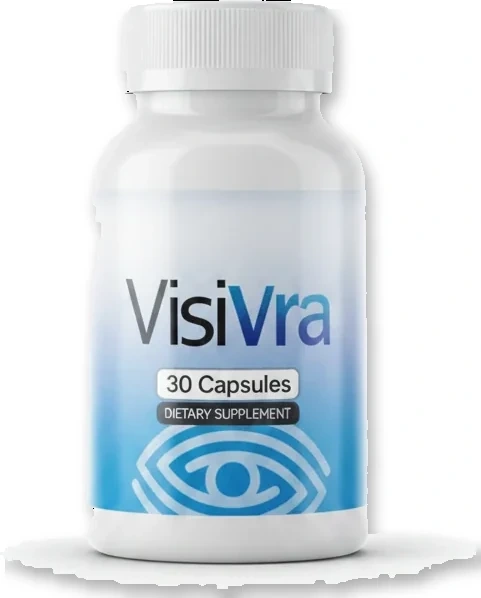
Order Visivra On The Official WebsiteOne capsule a day · 30 per bottle · lot VIS-26/VI-5716