Visivra Official Website › Choosing A Formula
Choosing A FormulaHow To Choose A Vision Supplement: Eight Checks
Eight checks, and the first one decides whether the rest are possible.
Does the panel print an amount for every active. Are lutein and zeaxanthin both there. Is copper named beside the zinc. Which form is the vitamin A. Do the extras have a human trial. Do the marks name an issuer. Is the window sixty days with opened bottles included.
A checklist for the aisle, in the order that eliminates the most bottles for the least effort. It is applied to this desk's own product at the foot.
Check one: does the panel print an amount for every active?
Eight checks, in the order that eliminates the most bottles for the least effort.
This is the first check because it decides whether any of the others can be done at all. A Supplement Facts panel that names an ingredient without a quantity is telling you what is in the bottle and refusing to tell you how much, and in this category the amount is the entire evidence base.
AREDS2 used lutein 10 mg and zeaxanthin 2 mg a day, for a median of five years. A formula at a tenth of that is not a weaker version of the same thing; it is a different product with the same ingredient list. Without the figure you cannot tell which you are holding.
The same check catches proprietary blends, where a single total is given for a group of ingredients. A blend total tells you the sum and hides the split, which means the cheapest ingredient can be almost all of it.
If the panel prints amounts, everything below becomes answerable. If it does not, you are buying a shopping list and the rest of the checklist becomes a judgement about the seller rather than about the formula.
Check two: are lutein and zeaxanthin both there, and in proportion?
These two are the anchor of the category and they are always tested together. A formula with lutein and no zeaxanthin is missing the carotenoid most concentrated at the very centre of the fovea.
The ratio worth recognising is roughly five to one, because that is what the trials used: lutein 10 mg and zeaxanthin 2 mg a day, for a median of five years in AREDS2, and lutein 10 mg and zeaxanthin 2 mg a day for one year, 115 young adults in the one-year trial in healthy young adults. A label at 20 mg of lutein and 0.5 mg of zeaxanthin is not following any trial.
The meta-analysis of macular pigment against visual function is the source for what raising that pigment is associated with, and the honest summary is that glare recovery and contrast move more reliably than letter-chart acuity does.
Check three: if there is zinc, is there copper?
This is the single most useful safety check on an eye supplement shelf and it takes four seconds.
The original AREDS formula used zinc 80 mg as zinc oxide WITH copper 2 mg as cupric oxide. The copper was not decoration. Zinc and copper compete for the same absorption route, and months of high zinc without copper quietly drives copper down; a 2026 case report is one of many describing the neurological consequence.
At a modest zinc amount this matters far less, which is exactly why check one comes first: with a figure you can judge it, and without one you cannot. AREDS2 later tested a 25 mg arm and found no clear difference in progression, so a high figure is not automatically better.
The Institute of Medicine zinc chapter is the primary source for the adult upper limit, and it is the number to hold in your head if you take anything else containing zinc.
Check four: which form is the vitamin A?
Vitamin A on a label means two chemically different things and the difference is not cosmetic.
Preformed vitamin A, listed as retinol, retinyl palmitate or retinyl acetate, is absorbed directly, stored in the liver and has a real adult upper limit. A 2026 systematic review collects what chronic excess produces. Provitamin A carotenoids, principally beta carotene, are converted on demand and behave quite differently.
For smokers and former smokers the beta carotene form is the one to avoid: CARET gave beta carotene 30 mg plus retinyl palmitate 25,000 IU a day, in smokers and asbestos-exposed workers and was stopped early for more lung cancer, and ATBC had already found the same. AREDS2 removed beta carotene from the eye formula for that reason, which is the clearest possible signal from inside this category.
A label that says Vitamin A without a form is not answering the question. The Institute of Medicine vitamin A chapter is the source for the upper limit on the preformed form.
Check five: what is the evidence for the extras?
Most eye formulas carry one or two ingredients beyond the AREDS core, and this is where the shelf differentiates itself. The check is not whether an extra has a mechanism, because everything has a mechanism. It is whether it has a human trial with an outcome anybody would notice.
Bilberry has three small ones: 240 mg of standardised bilberry extract once a day for twelve weeks in an accommodation trial, 480 mg of bilberry extract a day for eight weeks in screen workers, and 400 mg a day of fermented bilberry extract for one month in short-sighted eyes. All are about eye fatigue and focusing rather than about the retina.
Astaxanthin has one good recent trial: 4 mg of astaxanthin a day for eighty-four days, in children aged 10 to 14, in children with digital eye strain. That is a real result and it is not an adult result.
Saffron, omega-3 and anthocyanin blends turn up frequently. AREDS2 tested DHA and EPA directly and found no benefit for progression, so a formula leaving omega-3 out is arguably following the evidence rather than cutting a corner.
Check six: what do the marks on the front actually certify?
Every bottle in this aisle carries a row of roundels and most of them certify something narrower than they appear to.
Good Manufacturing Practice is a process standard about the factory: documentation, cleaning, traceability, deviation records. It is real and it says nothing about whether the formula works.
FDA-registered facility means the factory filed a registration with the agency. It is not an approval and not an inspection result. No dietary supplement is approved by the FDA before sale.
Non-GMO, natural ingredients and doctor formulated are the three to read hardest, because they frequently name no issuing body at all. A mark with no certifier and no number is the manufacturer making a claim about itself. Doctor formulated in particular is worth checking: if no clinician is named anywhere, there is no qualification and no institution to look up.
A money-back window that includes opened bottles. It is not evidence of quality, but it is the only mark on a front panel that gives a buyer a mechanism rather than a reassurance.
Check seven: how long is the window, and does it include opened bottles?
This is the check people skip and it is the one with the most money attached.
An eye supplement cannot be judged quickly. The shortest trial cited in this file, the screen-worker bilberry trial, ran eight weeks and took its first reading at four. A thirty-day returns policy closes before the first reading in the shortest relevant trial.
The second half of the check is whether opened bottles count. A window that only covers unopened stock is a returns policy, not a trial period, and it is useless for this purpose: you cannot test something without opening it.
Sixty days with opened bottles included is the minimum that makes a fair test possible, and it is worth more than a discount of the same value.
Check eight: is this the right purchase at all?
The last check is the one no label answers.
If your vision has changed, the purchase to make is an eye examination. New blur, a shadow in the field, distorted lines, a shower of floaters, or a difference between the two eyes all have causes that need looking at, and some of them are treatable only while they are early.
The Cochrane review of supplements in healthy eyes found no evidence that antioxidant supplements prevent age-related macular degeneration from starting, and its companion review covers people who already have it. Those are two different questions and most shelf marketing blurs them.
And if the problem is screen fatigue, the TFOS Lifestyle report is worth reading first: blink rate, tear film, room light, break frequency and an up-to-date correction do more, measurably, than most bottles. A randomised blink-training trial is one of the few interventions here with a controlled result behind it.
The eight checks, on one line each
- Does the panel print an amount for every named active?
- Are lutein and zeaxanthin both present, at roughly five to one?
- If there is zinc, is copper named beside it?
- Which form is the vitamin A, and does that suit you?
- Do the extras have a human trial with an outcome, or only a mechanism?
- Do the marks on the front name an issuer you could look up?
- Is the window at least sixty days, with opened bottles included?
- Is a supplement the right purchase at all this month?
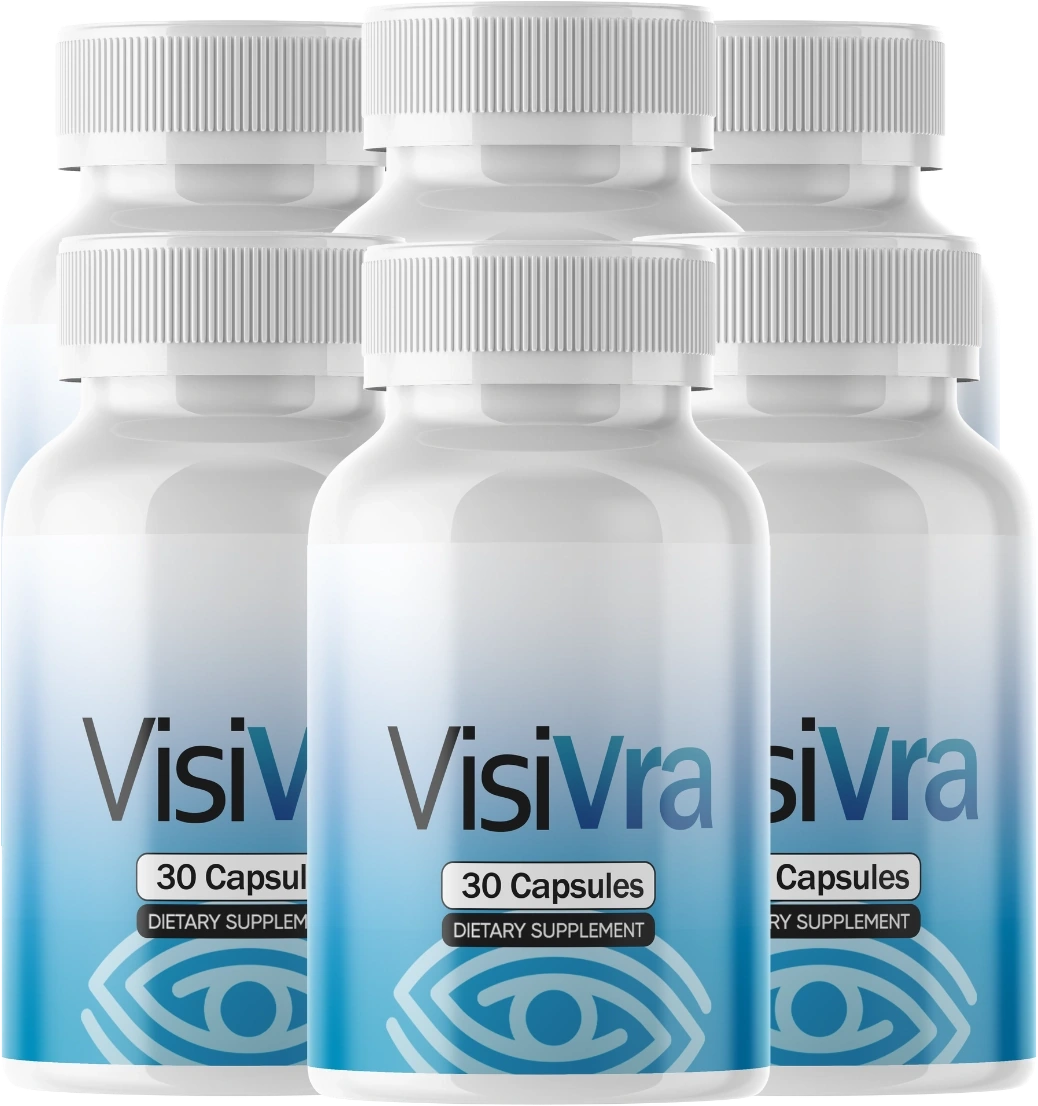
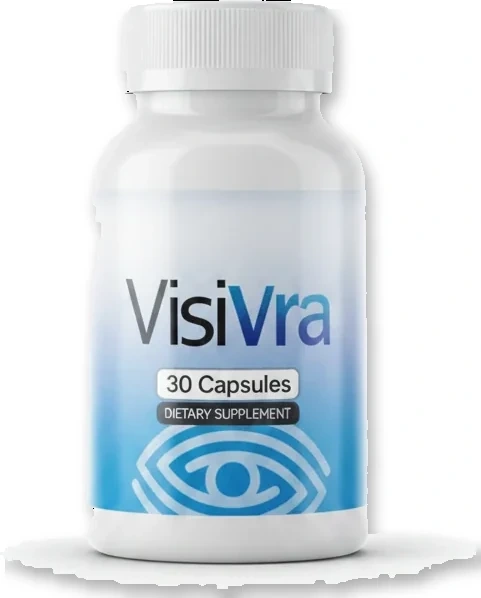
Applied to the product this desk sells, the result is mixed and it is published rather than hidden: check two passes, checks three and four cannot be answered from the label, check five passes on five of six, check six finds three unbadged marks, check seven passes at sixty days, and check one fails. The scored version is on the home page.
Who publishes this Visivra website?
- Age-Related Eye Disease Study 2 (AREDS2) Research Group. Lutein + zeaxanthin and omega-3 fatty acids for age-related macular degeneration: the Age-Related Eye Disease Study 2 (AREDS2) randomized clinical trial. JAMA. 2013;309(19):2005-15. PMID 23644932. https://pubmed.ncbi.nlm.nih.gov/23644932/
- Hammond BR, Fletcher LM, Roos F, et al. A double-blind, placebo-controlled study on the effects of lutein and zeaxanthin on photostress recovery, glare disability, and chromatic contrast. Invest Ophthalmol Vis Sci. 2014;55(12):8583-9. PMID 25468896. https://pubmed.ncbi.nlm.nih.gov/25468896/
- Johnson EJ, Avendano EE, Mohn ES, et al. The association between macular pigment optical density and visual function outcomes: a systematic review and meta-analysis. Eye (Lond). 2021;35(6):1620-1628. PMID 32792595. https://pubmed.ncbi.nlm.nih.gov/32792595/
- Age-Related Eye Disease Study Research Group. A randomized, placebo-controlled, clinical trial of high-dose supplementation with vitamins C and E, beta carotene, and zinc for age-related macular degeneration and vision loss: AREDS report no. 8. Arch Ophthalmol. 2001;119(10):1417-36. PMID 11594942. https://pubmed.ncbi.nlm.nih.gov/11594942/
- Goodrich Z, Schneider J. Zinc-associated Copper Deficiency Myelopathy: A Case Report. Clin Neuropharmacol. 2026. PMID 42757636. https://pubmed.ncbi.nlm.nih.gov/42757636/
- Institute of Medicine (US) Panel on Micronutrients. Zinc. In: Dietary Reference Intakes for Vitamin A, Vitamin K, Arsenic, Boron, Chromium, Copper, Iodine, Iron, Manganese, Molybdenum, Nickel, Silicon, Vanadium, and Zinc. Washington (DC): National Academies Press; 2001. https://www.ncbi.nlm.nih.gov/books/NBK222317/
- Institute of Medicine (US) Panel on Micronutrients. Vitamin A. In: Dietary Reference Intakes for Vitamin A, Vitamin K, Arsenic, Boron, Chromium, Copper, Iodine, Iron, Manganese, Molybdenum, Nickel, Silicon, Vanadium, and Zinc. Washington (DC): National Academies Press; 2001. https://www.ncbi.nlm.nih.gov/books/NBK222318/
- Omenn GS, Goodman GE, Thornquist MD, et al. Effects of a combination of beta carotene and vitamin A on lung cancer and cardiovascular disease. N Engl J Med. 1996;334(18):1150-5. PMID 8602180. https://pubmed.ncbi.nlm.nih.gov/8602180/
- The Alpha-Tocopherol, Beta Carotene Cancer Prevention Study Group. The effect of vitamin E and beta carotene on the incidence of lung cancer and other cancers in male smokers. N Engl J Med. 1994;330(15):1029-35. PMID 8127329. https://pubmed.ncbi.nlm.nih.gov/8127329/
- Padmakar S. Clinical Spectrum and Management of Hypervitaminosis A: A Systematic Review of Case-Based Evidence. Clin Chim Acta. 2026;590:121117. PMID 42176931. https://pubmed.ncbi.nlm.nih.gov/42176931/
- Kosehira M, Machida N, Kitaichi N. A 12-Week-Long Intake of Bilberry Extract (Vaccinium myrtillus L.) Improved Objective Findings of Ciliary Muscle Contraction of the Eye: A Randomized, Double-Blind, Placebo-Controlled, Parallel-Group Comparison Trial. Nutrients. 2020;12(3). PMID 32106548. https://pubmed.ncbi.nlm.nih.gov/32106548/
- Ozawa Y, Kawashima M, Inoue S, et al. Bilberry extract supplementation for preventing eye fatigue in video display terminal workers. J Nutr Health Aging. 2015;19(5):548-54. PMID 25923485. https://pubmed.ncbi.nlm.nih.gov/25923485/
- Kamiya K, Kobashi H, Fujiwara K, et al. Effect of fermented bilberry extracts on visual outcomes in eyes with myopia: a prospective, randomized, placebo-controlled study. J Ocul Pharmacol Ther. 2013;29(3):356-9. PMID 23113643. https://pubmed.ncbi.nlm.nih.gov/23113643/
- Hecht KA, Marwah M, Wood V, et al. Astaxanthin (AstaReal) Improved Acute and Chronic Digital Eye Strain in Children: A Randomized Double-Blind Placebo-Controlled Trial. Adv Ther. 2025;42(4):1811-1833. PMID 40014233. https://pubmed.ncbi.nlm.nih.gov/40014233/
- Evans JR, Lawrenson JG. Antioxidant vitamin and mineral supplements for preventing age-related macular degeneration. Cochrane Database Syst Rev. 2017;7(7):CD000253. PMID 28756617. https://pubmed.ncbi.nlm.nih.gov/28756617/
- Evans JR, Lawrenson JG. Antioxidant vitamin and mineral supplements for slowing the progression of age-related macular degeneration. Cochrane Database Syst Rev. 2023;9(9):CD000254. PMID 37702300. https://pubmed.ncbi.nlm.nih.gov/37702300/
- Wolffsohn JS, Lingham G, Downie LE, et al. TFOS Lifestyle: Impact of the digital environment on the ocular surface. Ocul Surf. 2023;28:213-252. PMID 37062428. https://pubmed.ncbi.nlm.nih.gov/37062428/
- Ashwini DL, Ve RS, Nosch D, et al. Efficacy of blink software in improving the blink rate and dry eye symptoms in visual display terminal users - A single-blinded randomized control trial. Indian J Ophthalmol. 2021;69(10):2643-2648. PMID 34571605. https://pubmed.ncbi.nlm.nih.gov/34571605/
Order Visivra if it survives your own checklist
It passes some of these and fails one of them, and this desk publishes which. The sixty-day window is what makes acting on that safe.
Two bottles $158 · six bottles $294 · 60-day money-back guarantee
Order Visivra On The Official WebsiteOne capsule a day · 30 per bottle · lot VIS-26/VI-5716