Beta-Carotene in Eye Supplements: The Trial Doses Behind the Smoker Warning
Quick Answer: Should Smokers Avoid Beta-Carotene in Eye Supplements?
Two large trials that gave current smokers 20 mg and 30 mg of beta-carotene a day found more lung cancer in the supplemented groups, which is why modern eye formulas replaced beta-carotene with lutein and zeaxanthin — and why anyone who smokes or used to smoke should read the panel and ask a doctor first. The Finnish ATBC trial reported an 18% higher lung-cancer incidence at 20 mg a day; the American CARET trial reported a relative risk of 1.28 at 30 mg a day and was halted 21 months early. Both used far more beta-carotene than a typical eye capsule, but the direction of the finding is why the ingredient carries a warning at all.
- Trial doses: 20 mg (ATBC), 30 mg plus vitamin A (CARET), 15 mg in the original AREDS eye formula.
- Modern formula: AREDS2 swapped beta-carotene for 10 mg lutein + 2 mg zeaxanthin.
- Action: if you smoke or have smoked, read the Supplement Facts panel and speak to a doctor before buying.
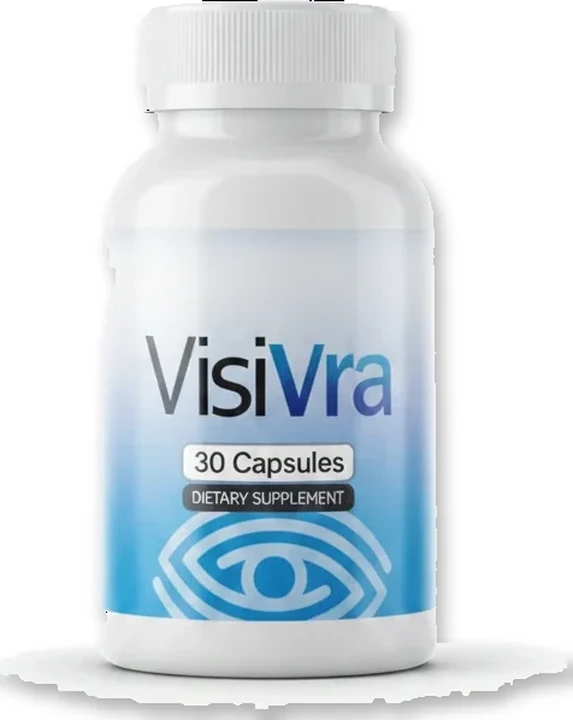
Almost every page on this topic writes from the disease angle — smoking and macular degeneration. That is not the question most buyers have. Theirs is narrower: there is beta-carotene in the eye capsule I am about to buy, and I smoke or used to. Does that matter to me? Answering it needs two numbers: the dose the trials used, and the dose in front of you. Here are both.
The trials behind the warning, dose by dose
Five studies generate the entire warning. Every figure below is taken from the published abstract.
| Trial | Year | Population | Beta-carotene dose/day | Duration | Lung-cancer finding |
|---|---|---|---|---|---|
| ATBC (Alpha-Tocopherol, Beta Carotene Cancer Prevention Study Group), N Engl J Med 1994;330(15):1029–35. PMID 8127329 | 1994 | 29,133 male smokers aged 50–69, south-western Finland | 20 mg (with 50 mg alpha-tocopherol in the factorial design) | 5–8 years of follow-up | 876 new lung cancers. 18% higher incidence in the beta-carotene groups (95% CI 3% to 36%). Vitamin E showed no reduction (−2%, 95% CI −14% to 12%). |
| CARET — Omenn GS, Goodman GE, Thornquist MD, et al., N Engl J Med 1996;334(18):1150–5. PMID 8602180 | 1996 | 18,314 smokers, former smokers and asbestos-exposed workers | 30 mg plus 25,000 IU retinyl palmitate | Mean 4.0 years; stopped 21 months early | Relative risk of lung cancer 1.28 in the active-treatment group (95% CI 1.04 to 1.57; P=0.02), i.e. 28% higher. |
| AREDS original formula — AREDS Report No. 8, Arch Ophthalmol 2001;119(10):1417–36. PMID 11594942 | 2001 | 3,640 participants aged 55–80 with age-related macular changes | 15 mg (with vitamin C 500 mg, vitamin E 400 IU, zinc 80 mg, copper 2 mg) | Average 6.3 years | The trial reported no statistically significant serious adverse effect for any formulation, but it was not powered as a lung-cancer study and the ATBC/CARET signal was already known. |
| AREDS2 — AREDS2 Research Group, JAMA 2013;309(19):2005–15. PMID 23644932 | 2013 | 4,203 participants aged 50–85; secondary randomisation removed beta-carotene | Beta-carotene eliminated in one arm; 10 mg lutein + 2 mg zeaxanthin added | Median 5 years | 23 lung cancers (2.0%) in the beta-carotene group vs 11 (0.9%) without it (nominal P=0.04), “mostly in former smokers”. |
| AREDS2 Report 28 — Chew EY, Clemons TE, Agrón E, et al., JAMA Ophthalmol 2022;140(7):692–698. PMID 35653117 | 2022 | 3,882 AREDS2 participants (mean age 72.0), 6,351 eyes | Original randomisation carried forward | 10 years total follow-up | Odds of lung cancer at 10 years OR 1.82 (95% CI 1.06–3.12; P=0.02) for beta-carotene, versus OR 1.15 (95% CI 0.79–1.66; P=0.46, not significant) for lutein/zeaxanthin. |
Why the dose comparison matters more than the word on the panel
Seeing “beta-carotene” on an ingredient list tells you nothing on its own. The number beside it is the only part that connects to the trials, and no consumer page seems to print the comparison.
Tanvetyanon and Bepler did the survey. Alongside a meta-analysis of four trials covering 109,394 subjects, they bought and examined 47 common national-brand multivitamins. Beta-carotene appeared in 70% of the formulas. The median daily amount was 0.3 mg, with a range of 0 to 17.2 mg. But the beta-carotene content was significantly higher in multivitamins sold to support visual health: a median of 3 mg a day, with a range running to 24 mg.
Three things follow. First, the median vision multivitamin in that survey carried roughly one-seventh of the ATBC dose — well below the studied exposure. Second, the top of the range, 24 mg, sits above ATBC's 20 mg, so “eye supplements contain less than the trials” is true on average and false at the extremes, and you cannot tell which you are holding without reading the panel. Third, the paper's own conclusion was that high-dose beta-carotene was concentrated precisely in the formulas aimed at eyesight — bought largely by older people, the group most likely to have a smoking history.
Hence the modern advice: not “avoid all beta-carotene”, but “find the milligram figure, and if you have any smoking history, take it to a doctor.”
Check the panel before you buy anything
Visivra is a macular carotenoid formula built around lutein and zeaxanthin. We do not publish milligram amounts we have not verified from the label — read the Supplement Facts panel yourself, and talk to a doctor first if you smoke or used to.
Get OfferCurrent smoker, former smoker, never smoked: what the data separates
Most articles blur these three groups. The published data separates them, imperfectly.
Current smokers. This is where the evidence is strongest and most consistent. ATBC enrolled male smokers exclusively and reported an 18% higher lung-cancer incidence at 20 mg a day. The Tanvetyanon meta-analysis pooled four trials and found an odds ratio among current smokers of 1.24 (95% CI 1.10–1.39) — a statistically significant association. Every major eye-health body's guidance for current smokers follows from this.
Former smokers. Here the two lines of evidence do not agree cleanly, and it would be dishonest to pretend otherwise. The same 2008 meta-analysis found no statistically significant increase among former smokers: OR 1.10, 95% CI 0.84–1.45 — a confidence interval that comfortably includes no effect. But AREDS2 points the other way. AREDS2 was designed so that the beta-carotene-containing formulation went only to people who had never smoked or who had already quit, and it still recorded 23 lung cancers in the beta-carotene group against 11 without, mostly in former smokers, with the 10-year follow-on reporting an odds ratio of 1.82. Two datasets, one null and one positive, in a group where the underlying baseline risk is already elevated by past smoking. That combination is exactly why the guidance was tightened to cover former smokers rather than loosened.
Never smoked. No trial has reported an increased lung-cancer signal from beta-carotene in people who have never smoked. That is a genuine absence of evidence of harm, not a demonstration of benefit, and it does not extend to any other outcome.
Why the AREDS formula changed
The swap from beta-carotene to lutein and zeaxanthin is not a marketing decision. It was tested.
AREDS2 ran a 2×2 factorial design in 4,203 participants, and separately asked whether the original AREDS formula could be improved by removing beta-carotene, lowering the zinc dose, or both. On the primary eye outcome, removing beta-carotene made no apparent difference to progression of macular changes. On safety, the lung-cancer counts diverged. The authors' own published conclusion was that “because of potential increased incidence of lung cancer in former smokers, lutein + zeaxanthin could be an appropriate carotenoid substitute in the AREDS formulation.”
The 10-year follow-on, AREDS2 Report 28, kept 3,882 of those participants under observation. It reported the lung-cancer odds ratio of 1.82 for beta-carotene against 1.15 — not significant — for lutein/zeaxanthin, alongside a hazard ratio of 0.85 for progression to late macular disease when lutein/zeaxanthin was compared directly with beta-carotene. In other words the substitute performed at least as well on the eye endpoint without carrying the same safety question. If you want the wider picture on what those two carotenoids do and do not do, our lutein and zeaxanthin evidence review covers it, and the glare and night-driving trials cover what was measured in healthy eyes.
What the evidence does not show
It does not show that a low-dose eye capsule carries the same risk as the trial doses. No trial has tested 1 mg or 3 mg of beta-carotene for lung-cancer outcomes. The honest statement is that the exposure was never studied at those amounts, not that it has been shown to be safe.
It does not show a mechanism anyone has settled. The proposed explanations — oxidative breakdown products of beta-carotene in a smoke-exposed lung, interference with retinoid signalling — remain hypotheses. Neither trial was designed to test them.
It does not apply to beta-carotene in food. ATBC and CARET tested isolated high-dose supplements. Neither reported a finding about dietary carrots, sweet potato or leafy greens, and this article makes no claim about them.
It does not tell you what to do. That is a clinical decision that depends on your smoking history, how long ago you quit, your other risk factors and what else you take. It belongs with a doctor, not with a supplement website.
If you smoke or have smoked
Read the Supplement Facts panel for beta-carotene and speak to a doctor before buying any carotenoid formula. Look for the ingredient name and the milligram figure beside it. Note that beta-carotene can also appear as part of a vitamin A total, or inside a proprietary blend where no individual amount is disclosed at all — in that case you cannot determine the dose, which is itself the answer. Bring the panel, or a photo of it, to the appointment.
How to actually check a panel
1. Look for the word itself. It may be printed as “beta-carotene”, “beta carotene”, or as a source note under vitamin A — “Vitamin A (as beta-carotene)”. All three mean the same ingredient is present.
2. Find the figure beside it. US panels may express vitamin A in mcg RAE, a converted unit rather than raw milligrams of beta-carotene. If only mcg RAE is shown, ask a pharmacist to convert it rather than guessing.
3. Check for a proprietary blend. If the carotenoids sit inside a blend with one combined weight, the individual amounts are not disclosed and cannot be inferred.
4. Compare against the reference numbers. The AREDS2 amounts — 10 mg lutein and 2 mg zeaxanthin, no beta-carotene — are the modern comparison point. Our Visivra review takes the same approach: check the label rather than trust figures nobody has verified. Beta-carotene is not the only ingredient on that panel carrying a caution — zinc and high-dose vitamin E have their own, set out in eye supplement side effects — and the full set of trial amounts to measure a label against is in the AREDS2 formula, dose by dose.
Frequently asked questions
Should smokers avoid beta-carotene in eye supplements?
The published trial evidence is why every major eye-health body says current smokers should not take a beta-carotene formula. ATBC gave 20 mg a day to male smokers and reported 18 percent more lung cancer in that group. CARET gave 30 mg a day plus 25,000 IU of retinyl palmitate to smokers and asbestos-exposed workers and was stopped 21 months early. A 2008 meta-analysis of four trials found an odds ratio of 1.24 for lung cancer among current smokers. If you smoke or used to smoke, read the Supplement Facts panel for beta-carotene and speak to a doctor before buying any carotenoid formula.
How much beta-carotene was used in the trials that caused the warning?
ATBC used 20 mg a day for 5 to 8 years. CARET used 30 mg a day alongside 25,000 IU of retinyl palmitate for a mean of 4 years. The original AREDS eye formula used 15 mg a day. By comparison, a 2008 survey of 47 national-brand multivitamins found a median of 0.3 mg a day, rising to a median of 3 mg a day among multivitamins sold to support visual health, with a range of 0 to 24 mg. That gap between 3 mg and 20 to 30 mg is the number no article usually shows you.
Does the risk apply to former smokers as well?
The picture is mixed and worth taking seriously. The 2008 meta-analysis found no statistically significant increase among former smokers, with an odds ratio of 1.10 and a confidence interval of 0.84 to 1.45. But AREDS2, which by design gave beta-carotene only to people who had never smoked or had already quit, still recorded 23 lung cancers in the beta-carotene group against 11 without it, mostly in former smokers. At 10 years the odds ratio was 1.82. That is why the guidance now covers former smokers, not just current ones.
Why did the AREDS formula replace beta-carotene with lutein and zeaxanthin?
Because AREDS2 tested exactly that swap. The trial randomised participants to eliminate beta-carotene, lower the zinc dose, or both, and reported more lung cancers in the beta-carotene group. Its own conclusion was that because of the potential increased incidence of lung cancer in former smokers, lutein plus zeaxanthin could be an appropriate carotenoid substitute in the AREDS formulation. The 10-year follow-on in 3,882 participants reported the same direction of effect.
Is beta-carotene from food a problem too?
The trials tested isolated high-dose supplements, not carrots or sweet potatoes. Dietary beta-carotene was not the exposure being studied, and none of these trials reported a finding about food intake. This article is about what appears on a Supplement Facts panel. Anyone with a smoking history who is deciding what to take should have that conversation with a doctor rather than with a website.
Medical note: this article reproduces findings from published clinical trials and standard supplement label warnings. It is general information, not medical advice, and it makes no claim that any supplement prevents, causes or reduces any disease. If you smoke or have ever smoked, discuss any carotenoid supplement with a qualified healthcare professional before taking it.
Scientific references
- The Alpha-Tocopherol, Beta Carotene Cancer Prevention Study Group. The effect of vitamin E and beta carotene on the incidence of lung cancer and other cancers in male smokers. N Engl J Med. 1994;330(15):1029–35. PMID 8127329.
- Omenn GS, Goodman GE, Thornquist MD, et al. Effects of a combination of beta carotene and vitamin A on lung cancer and cardiovascular disease (CARET). N Engl J Med. 1996;334(18):1150–5. PMID 8602180.
- Tanvetyanon T, Bepler G. Beta-carotene in multivitamins and the possible risk of lung cancer among smokers versus former smokers: a meta-analysis and evaluation of national brands. Cancer. 2008;113(1):150–7. PMID 18429004. DOI 10.1002/cncr.23527.
- Age-Related Eye Disease Study Research Group. A randomized, placebo-controlled, clinical trial of high-dose supplementation with vitamins C and E, beta carotene, and zinc for age-related macular degeneration and vision loss: AREDS report no. 8. Arch Ophthalmol. 2001;119(10):1417–36. PMID 11594942.
- Age-Related Eye Disease Study 2 (AREDS2) Research Group. Lutein + zeaxanthin and omega-3 fatty acids for age-related macular degeneration: the AREDS2 randomized clinical trial. JAMA. 2013;309(19):2005–15. PMID 23644932.
- Chew EY, Clemons TE, Agrón E, et al.; AREDS2 Research Group. Long-term outcomes of adding lutein/zeaxanthin and ω-3 fatty acids to the AREDS supplements on age-related macular degeneration progression: AREDS2 Report 28. JAMA Ophthalmol. 2022;140(7):692–698. PMID 35653117.
- National Eye Institute — NIH study confirms benefit of supplements for slowing age-related macular degeneration (summary of AREDS2 Report 28, including the beta-carotene finding).
- NIH Office of Dietary Supplements — Vitamin A and Carotenoids fact sheet.
See how Visivra puts this together
A once-daily macular carotenoid capsule from the official store, with the manufacturer's 60-day money-back guarantee. Read the Supplement Facts panel before you order, and speak to a doctor first if you have a smoking history.
Get Offer