Visivra Official Website › Blog › What A Lot Number Proves
What A Lot Number And A Certificate Reference Actually Prove
Supplement pages print lot codes and certificate references as though they were evidence. They are coordinates, not conclusions, and knowing the difference is the cheapest piece of consumer literacy in this category.
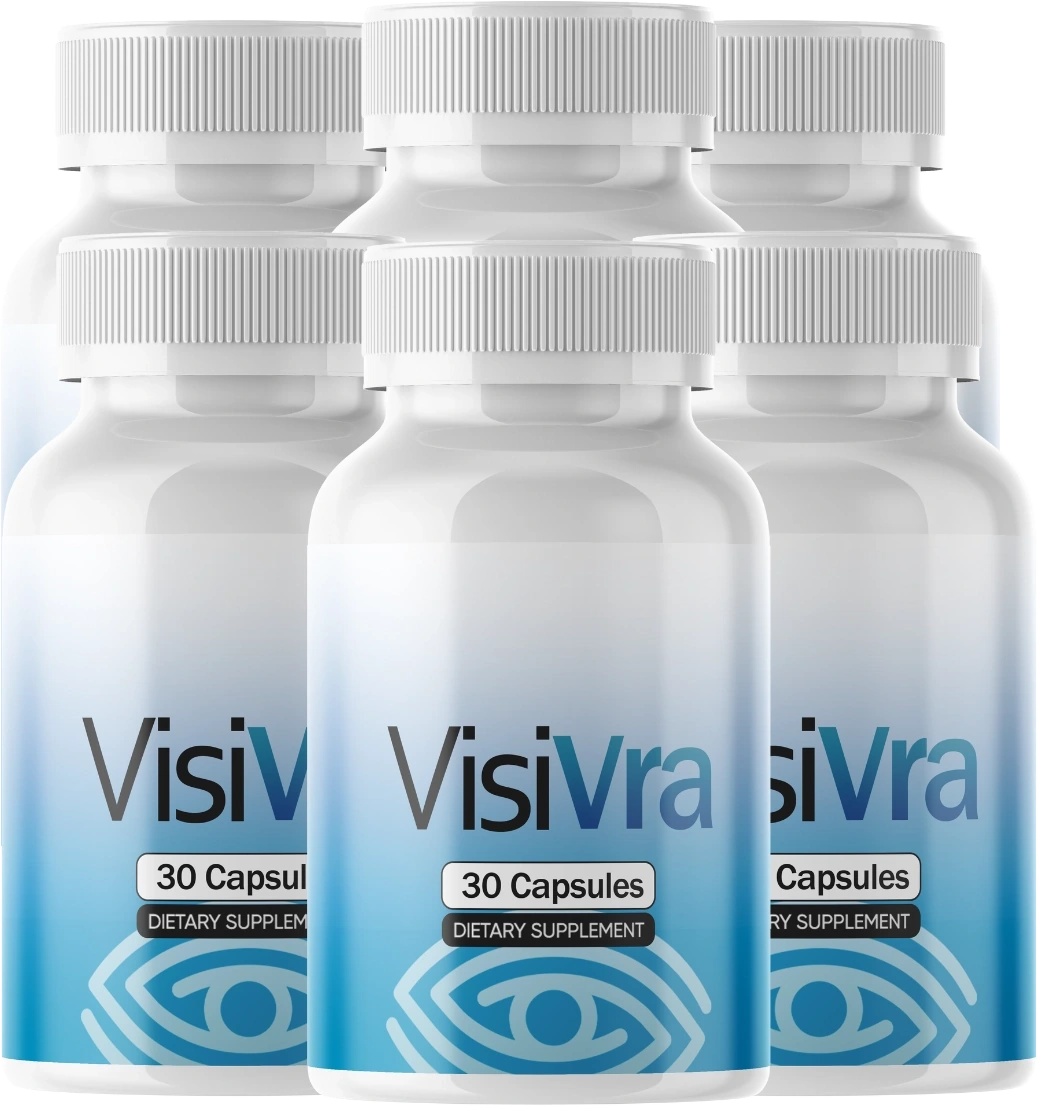
- A lot number identifies a production run. It is a coordinate that lets a question be asked precisely, and it proves nothing on its own.
- A certificate reference is a pointer to a document. A certificate is the document. Most sites publish the pointer.
- There is no public register of supplement certificates of analysis in the United States, so a reference cannot be looked up by a reader.
- Carotenoids degrade with light and heat, so storage history is a real variable and it is invisible from the outside.
- The order desk matching a lot to a despatch is the only route from a bottle in your hand back to a specific order.
What a lot number is
A lot, or batch, is one production run: a quantity of finished product made from the same raw materials, on the same line, over a defined period, under one set of batch records. The code identifying it is usually printed on the base of the bottle along with a best-before date. This site was written against lot VIS-26/VI-5716.
What a lot code enables is traceability. If something is wrong with a run, the manufacturer can identify which units were affected and where they went. If a buyer has a question about a specific bottle, the code is what makes the question answerable rather than general.
What it does not do is say anything at all about quality. A lot code on a good product and a lot code on a bad one look identical, because the code is an index entry rather than a verdict. Printing one on a marketing page and leaving the implication to do the work is a small piece of theatre that is very common in this category.
Certificate, reference, and the gap between them
A certificate of analysis is a document. It names a laboratory, a date, a batch, a set of tests and a set of results, usually covering identity of the raw materials, heavy metals, microbial counts and sometimes potency of a marker compound.
A certificate reference is a string that points at one. This desk holds VIS-5716-26-VI, which is a reference. It is printed on the batch page and described there as exactly what it is.
The gap matters because there is no public register of supplement certificates of analysis in the United States. A reader cannot type a reference into a website and read the document, which means a reference published without the document behind it is unverifiable by design rather than by accident.
That is not an accusation about any particular seller. It is how the category works, and a site printing a reference as though it were third-party verification is relying on a reader not knowing it.
| What it can establish | What it cannot |
|---|---|
| That a named batch was tested for identity of its raw materials | That the finished capsule contains a useful amount of anything |
| That heavy metals and microbial counts fell inside a specification | That the product works, which no analysis of any kind can show |
| That material matched the specification the buyer ordered | That your bottle came from the tested batch, unless the lot matches |
| A date, a laboratory and a method | Anything at all, if what you have is a reference rather than a document |
The right-hand column is the one worth reading twice. A certificate is a real piece of evidence about a narrow question; a reference to one is not evidence about anything.
Order Visivra on the official website
Six named actives in one capsule a day, thirty to a bottle, with a 60-day money-back window that includes opened bottles.
Two bottles $158 · six bottles $294 · 60-day money-back guarantee
Order Visivra On The Official WebsiteOne capsule a day · 30 per bottle · lot VIS-26/VI-5716
Why this matters more for carotenoids
Provenance is a stronger argument in this category than in most, and the reason is chemistry rather than caution.
Carotenoids are long conjugated molecules. The same extended double-bond system that makes them pigments, and that lets them quench reactive oxygen species, is what makes them vulnerable to light, heat and oxygen. That is why raw materials ship in sealed light-proof drums and why a finished bottle in this category is opaque rather than clear. The 2026 carotenoid review covers the stability question alongside the biology.
The practical consequence is that a supplement here has a storage history as well as a formulation, and the two are different things. A bottle that spent a summer in a hot warehouse or the back of a van is not chemically identical to the one that left the packer, and nothing visible on the outside distinguishes them.
That is the strongest argument for buying through an official route rather than a resale listing, and it is a better argument than price. The where-to-buy page sets out what else goes with a resale purchase.
What to check when a parcel arrives
- The seal under the cap. A broken seal is a call to the order desk before the first capsule, not after it.
- The lot code on the base of each bottle. On a multi-bottle pack, check every bottle rather than assuming they match.
- The best-before date, especially on the last bottle of a six-pack, which will not be opened for five months.
- The front panel, against the transcription on the label page here. If yours carries something this site does not describe, the bottle is right.
- The packing slip, which carries the order reference and is worth keeping with the order email.
Artwork and production runs change, and a bottle carrying a lot code this site does not name is most likely newer than this page. What would be a problem is a bottle naming a different set of actives, which is a formulation change rather than a new run, and that is worth a telephone call.
What a good answer from a seller looks like
It is worth knowing what you are hoping for when you call, because it sets the standard for the answer.
A good answer names the amount of each active in one capsule, names the form of the vitamin A, says whether copper is in the formula, and says what the capsule shell is made of. Those four questions are listed on the contact page for exactly this reason.
A very good answer offers the certificate of analysis document, not its reference. If that ever arrives at this desk it will be published in full, including anything in it that is unflattering.
A poor answer repeats the marketing, or says the formula is proprietary, or offers the lot code again. None of those is an answer to the question that was asked, and a reader is entitled to notice.
For what the amounts would be compared against if they ever arrived, the original AREDS formula and the Institute of Medicine zinc chapter are the two references that do most of the work, and the Cochrane review is the context for all of it.
The three things a lot code is genuinely good for
Having spent most of this post on what a lot code does not prove, it is only fair to set out what it does, because all three are real and all three are worth using.
Matching a bottle to an order
The order desk holds the despatch records. Given a lot code and an order ID it can say which shipment a bottle came from and when it left. That is the only route from an object in your hand back to a transaction, and it is why the batch page lists the telephone call as step four rather than step one.
Making a complaint specific
A report that says a capsule smelled wrong is hard to act on. A report that names a lot, a best-before date and a purchase date is a report a manufacturer can check against its own batch records. The difference in how quickly those two get taken seriously is considerable.
Noticing a formulation change
A new lot with a different set of named actives is not a new run, it is a different product. Nothing else on a bottle makes that visible, and a reader who records the lot code of a pack they were happy with has the only reference point that would let them notice.
None of those is the thing a lot code is usually printed to suggest. All three are more useful than what it is usually printed to suggest, which is that somebody somewhere has checked. The honest summary is that a lot code is an index entry, and an index entry is valuable precisely to the extent that somebody is willing to look the corresponding record up when you ask.
References
- Bioactive Properties of Carotenoids in Ocular Diseases: Antioxidant, Anti-Inflammatory, and Neuroprotective Effects — Lapinska J, Kasperczuk K, Koba A, et al (Nutrients, 2026;18(15)). PMID 42588090: https://pubmed.ncbi.nlm.nih.gov/42588090/
- A randomized, placebo-controlled, clinical trial of high-dose supplementation with vitamins C and E, beta carotene, and zinc for age-related macular degeneration and vision loss: AREDS report no 8 — Age-Related Eye Disease Study Research Group (Arch Ophthalmol, 2001;119(10):1417-36). PMID 11594942: https://pubmed.ncbi.nlm.nih.gov/11594942/
- Zinc — Institute of Medicine (US) Panel on Micronutrients, In: Dietary Reference Intakes for Vitamin A, Vitamin K, Arsenic, Boron, Chromium, Copper, Iodine, Iron, Manganese, Molybdenum, Nickel, Silicon, Vanadium, and Zinc, Washington (DC): National Academies Press; 2001: https://www.ncbi.nlm.nih.gov/books/NBK222317/
- Antioxidant vitamin and mineral supplements for slowing the progression of age-related macular degeneration — Evans JR, Lawrenson JG (Cochrane Database Syst Rev, 2023;9(9):CD000254). PMID 37702300: https://pubmed.ncbi.nlm.nih.gov/37702300/
- Astaxanthin (AstaReal) Improved Acute and Chronic Digital Eye Strain in Children: A Randomized Double-Blind Placebo-Controlled Trial — Hecht KA, Marwah M, Wood V, et al (Adv Ther, 2025;42(4):1811-1833). PMID 40014233: https://pubmed.ncbi.nlm.nih.gov/40014233/