Foods for Eye Health: A Nutrient Map for Your Plate
Quick Answer: What Should You Eat for Eye Health?
Build a plate around the nutrients the eye actually uses: lutein and zeaxanthin from leafy greens and egg yolk, zinc from oysters and beef, vitamin C from peppers and citrus, omega-3 from salmon and sardines, and vitamin A precursors from orange vegetables. No single food does it all, so aim for variety across the week, and use a supplement only to fill genuine gaps.
- Greens first: kale, spinach and egg yolk lead for macular carotenoids.
- Colour and fish: peppers, citrus, carrots, salmon and sardines round it out.
- Food-first: supplements fill gaps — they do not replace a varied diet.
Why a nutrient map beats a “superfood” list
Search “foods for eye health” and you will get the same short list of hero ingredients repeated everywhere, usually led by carrots. That framing is not wrong, but it is thin. Your eyes do not run on one nutrient; they draw on a handful of them, each doing a different job, and each concentrated in different foods. A more useful way to eat is to work backwards from the nutrients and ask which everyday foods carry them — a map, not a leaderboard.
This piece is deliberately broader than a lutein-only guide. We will walk through six nutrient groups your eyes rely on, name the foods that supply each in real quantities, and be straight about where diet does the job on its own and where it tends to fall short. The goal is a plate you can actually build, not a grocery list of exotic extracts.
Lutein and zeaxanthin: the macular carotenoids
These two carotenoids are the headline act for a reason: they are the pigments that concentrate in the macula, the central patch of retina responsible for sharp detail, where they form a yellow filter that absorbs high-energy blue light and mops up some oxidative stress. Your body cannot make them, so every bit comes from food.
The richest sources are dark leafy greens — kale, spinach, Swiss chard and collard greens — where a single cooked serving can carry many milligrams. After greens come egg yolks, which contain less lutein by weight but deliver it in a form your body absorbs unusually well, because the fat in the yolk carries these fat-soluble pigments across the gut. Sweetcorn, peas, broccoli and orange peppers add useful smaller amounts. A practical habit: cook greens with a little olive oil or eat them alongside eggs, cheese or avocado, because fat sharply improves how much of these carotenoids you actually absorb.
Zinc: the mineral the retina hoards
Zinc is quietly essential to the eye. It is highly concentrated in the retina, where it supports the antioxidant enzymes that protect delicate photoreceptors, and it was a core component of the original AREDS formula. The standout food source is oysters, which contain more zinc per serving than almost anything else. After that come beef, lamb, poultry and crab.
Plant eaters are not shut out: pumpkin seeds, chickpeas, lentils, cashews and whole grains all contribute. The honest caveat is absorption — plant foods contain phytates that bind zinc and lower how much you take up, so vegetarians and vegans generally need somewhat more total zinc from food to land in the same place. Soaking, sprouting or fermenting legumes and grains reduces phytates and helps.
Vitamin C: antioxidant defence in the front of the eye
Vitamin C is found in high concentrations in the fluid of the eye and acts as a water-soluble antioxidant, working alongside vitamin E. It featured in both AREDS formulas. The best sources are easier to hit than people assume: red and yellow bell peppers are exceptionally high — higher, gram for gram, than oranges — followed by citrus fruits, strawberries, kiwi, broccoli and Brussels sprouts. Because vitamin C is fragile and water-soluble, some is lost to heat and long cooking, so a mix of raw and lightly cooked produce keeps intake up.
Omega-3 fats: for the retina and the tear film
The long-chain omega-3 fatty acids DHA and EPA are building blocks of the retina, and DHA in particular is a structural fat of photoreceptor membranes. They are also studied for their role in the tear film and everyday dry-eye comfort, where the evidence is mixed but plausible. The most reliable dietary sources are oily fish — salmon, sardines, mackerel, herring and trout. Two servings of oily fish a week is a common, sensible target.
Plant sources such as flaxseed, chia and walnuts provide ALA, a shorter omega-3 that the body converts to DHA and EPA only inefficiently, so they help but do not fully substitute for fish or an algae-based supplement.
Vitamin A precursors: the classic, in proportion
Vitamin A is genuinely essential for vision — the retina needs it for the light-sensing cycle — which is the kernel of truth behind the carrot myth. You get it two ways: preformed vitamin A from animal foods like liver, eggs and dairy, and provitamin A carotenoids like beta-carotene from orange and deep-yellow vegetables: carrots, sweet potato, pumpkin, butternut squash, plus leafy greens. The body converts beta-carotene into vitamin A as needed. Just keep it in proportion: eating more carrots does not give a well-nourished person night vision beyond normal, and very high beta-carotene supplements carry a specific caution for smokers.
The eye-nutrient map, on one plate
| Nutrient | What it does for the eye | Best everyday foods |
|---|---|---|
| Lutein & zeaxanthin | Build macular pigment; filter blue light | Kale, spinach, egg yolk, sweetcorn |
| Zinc | Supports retinal antioxidant enzymes | Oysters, beef, pumpkin seeds, lentils |
| Vitamin C | Antioxidant in eye fluid | Bell peppers, citrus, strawberries, broccoli |
| Omega-3 (DHA/EPA) | Retinal structure; tear-film support | Salmon, sardines, mackerel; walnuts, chia |
| Vitamin A / beta-carotene | Light-sensing cycle of the retina | Carrots, sweet potato, liver, eggs |
| Vitamin E | Fat-soluble antioxidant partner | Almonds, sunflower seeds, avocado |
Food first — and where supplements honestly fit
The strongest, least controversial advice in eye nutrition is also the least glamorous: eat a varied, colourful, mostly whole-food diet, and most people will cover the bases. Whole foods deliver these nutrients in packages — fibre, fat, cofactors — that a pill cannot fully reproduce, and there is no supplement that outperforms a genuinely good diet across the board.
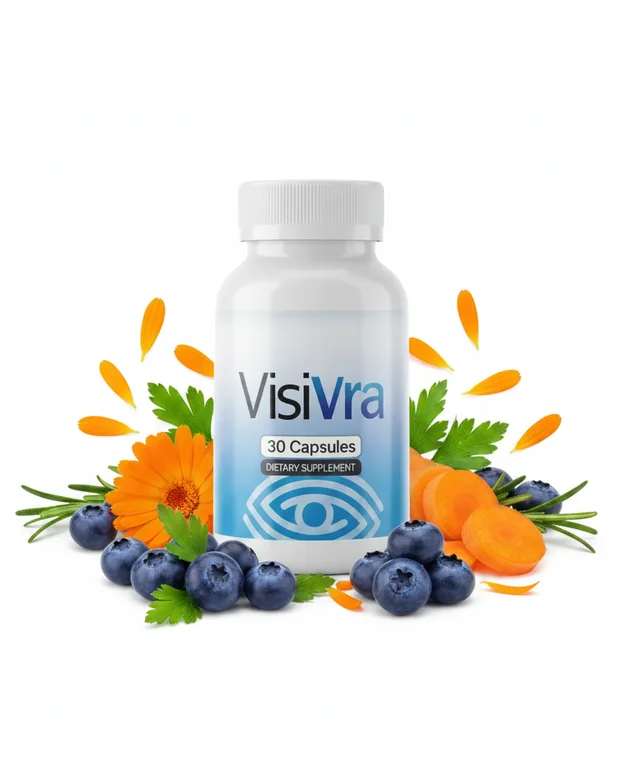
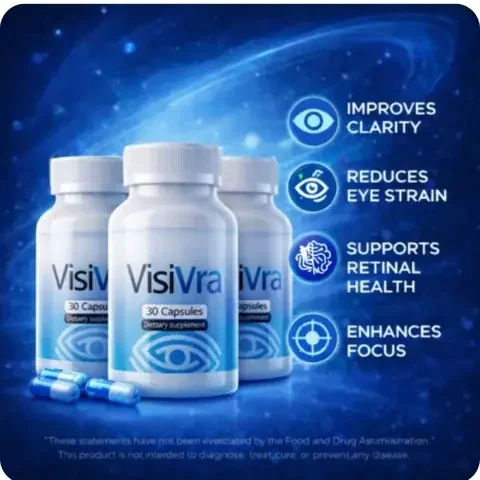
Here is the honest tension, though. The amounts of lutein, zeaxanthin and zinc studied in trials like AREDS2 are higher than a typical plate provides, and many people simply do not eat leafy greens, oily fish and coloured vegetables often enough to get close. That is the legitimate role for a supplement: to fill a gap, not to license a poor diet. If your week already has greens most days, eggs, some fish and a spread of colour, you may not need much more. If it does not, a formula like Visivra — lutein, zeaxanthin, bilberry, beta-carotene, zinc and vitamins C and E in one daily capsule — is a reasonable way to reach the amounts the research used, while you work on the plate.
Medical note: this article is general nutrition information, not medical advice. Food and supplements support eye health; they do not diagnose, treat or cure eye disease. If you smoke or recently quit, take care with high-dose beta-carotene and speak to a professional. See an eye-care provider for any vision changes.
Related reading
- Vitamin C and E for eye health: the real role
- Omega-3 and dry eye: what the research shows
- Do carrots improve night vision? The myth, unpacked
- Saffron and macular function: the evidence
Frequently asked questions
What foods are richest in eye-supporting nutrients?
Leafy greens such as kale and spinach top the list for lutein and zeaxanthin, egg yolks add the same carotenoids in a highly absorbable form, oily fish like salmon and sardines supply omega-3s, orange and red vegetables provide vitamin A precursors, peppers and citrus deliver vitamin C, and oysters, beef and pumpkin seeds are strong zinc sources. No single food covers everything, which is why variety across the week matters more than any one superfood.
Can I get enough eye nutrients from diet alone?
Many people can, and a varied whole-food diet is the sensible foundation. The honest catch is that the amounts studied in trials like AREDS2 are higher than a typical plate delivers, especially for lutein and zeaxanthin. If your diet is light on leafy greens, coloured vegetables and oily fish, a supplement is a reasonable way to fill the gap rather than a replacement for eating well.
Are egg yolks a good source of lutein?
Yes, and better than the raw milligram count suggests. Egg yolks contain less lutein than a serving of kale, but the fat in the yolk carries these fat-soluble carotenoids so your body absorbs a larger share of what is there. That makes eggs an efficient, everyday way to add lutein and zeaxanthin, alongside greens rather than instead of them.
Which foods provide zinc for the eyes?
Oysters are by far the richest source, followed by red meat and poultry. Plant foods such as pumpkin seeds, chickpeas, lentils and whole grains also contribute, though the zinc in plants is absorbed less efficiently because of compounds called phytates. Zinc is concentrated in the retina and was a core nutrient in the AREDS formula, so it is worth having reliable sources in your week.
Scientific references
- National Eye Institute — Age-Related Eye Disease Studies (AREDS/AREDS2)
- NIH Office of Dietary Supplements — Zinc fact sheet
- NIH Office of Dietary Supplements — Vitamin C fact sheet
- American Academy of Ophthalmology — Diet and Nutrition for Your Eyes
- Wu J, Cho E, Willett WC, et al. Intakes of lutein, zeaxanthin, and other carotenoids and age-related macular degeneration during 2 decades of prospective follow-up. JAMA Ophthalmol 2015;133(12):1415-24. PMID 26447482
Fill the gaps your plate misses
When greens and oily fish are thin on the ground, Visivra delivers lutein, zeaxanthin, zinc and antioxidant vitamins in one daily capsule — a food-first backstop, not a substitute.
Get Offer