Do Eye Exercises Improve Vision? A Fact Check
Quick Answer: Do Eye Exercises Improve Vision?
Not in the way most programmes claim. Eye exercises cannot change the shape of your eye, so they cannot correct short-sightedness, long-sightedness or astigmatism or replace glasses. The one genuinely validated use is supervised vision therapy for convergence insufficiency. The 20-20-20 rule helps screen comfort, not sharpness.
- Cannot: fix refractive error or eliminate the need for glasses.
- Can: treat convergence insufficiency, backed by a major randomised trial.
- Comfort only: the 20-20-20 rule eases strain without sharpening vision.
Search for eye exercises and you will find two very different worlds. One promises to cure short-sightedness, retrain your eyes and free you from glasses forever. The other is a small, unglamorous corner of clinical practice where specific exercises are prescribed for specific problems and actually work. Telling these apart is the whole job of this article — because the gap between the marketing and the evidence is unusually wide here.
Why exercises cannot fix a blurry prescription
Most people who want sharper vision have a refractive error: myopia (short-sightedness), hyperopia (long-sightedness) or astigmatism. These are not habits or weaknesses to be trained away. They are structural. Whether the world lands in focus on your retina depends on the length of your eyeball and the curvature of your cornea and lens. If the eye is a fraction too long, distant objects focus in front of the retina and look blurry — that is myopia, and no amount of eye rolling, focusing drills or palming changes the physical length of your eye.
This is the central reason the American Academy of Ophthalmology and the wider profession are clear that eye exercises do not correct refractive error and cannot eliminate the need for glasses or contact lenses. The most famous of the "natural vision" systems, the Bates method from the early twentieth century, has been reviewed repeatedly and found to lack evidence for its central claims; some of its practices, like staring at the sun, are outright unsafe. A 2005 systematic review of eye exercises concluded there was no clear scientific evidence to support their use for improving general visual function or curing refractive conditions.
So if a programme's headline is "improve your eyesight and ditch your glasses," the honest verdict is that it is selling something the evidence does not back.
The one place eye exercises genuinely work
Here is the important nuance that gets lost in the debunking: eye exercises are not uniformly useless. There is one well-defined condition where structured exercises, delivered properly, have strong evidence behind them — convergence insufficiency.
Convergence is the ability of your two eyes to turn inward together and stay aligned when you focus on something close, like a book or a phone. In convergence insufficiency the eyes struggle to do this comfortably, and the result is eye strain, headaches, blurred or double vision and difficulty concentrating during reading. It is a coordination problem, not a refractive one — and coordination is exactly the kind of thing training can improve.
The landmark evidence is the Convergence Insufficiency Treatment Trial (CITT), a randomised study in children published in 2008. It compared several approaches and found that office-based vision therapy supervised by a trained professional, combined with home reinforcement, was significantly more effective than home exercises alone or placebo therapy at relieving symptoms and improving the eyes' convergence. This is real, trial-grade evidence that a specific set of eye exercises fixes a specific problem. It is also the reason the "eye exercises don't work" slogan is too broad: for this diagnosis, they clearly do.
The catch is that this validated use looks nothing like a general "improve your vision" app. It is targeted therapy for a diagnosed condition, guided by an optometrist or orthoptist, not a routine everyone should do to sharpen normal eyes.
What eye exercises can and cannot do
Cannot: correct myopia, hyperopia or astigmatism, or remove the need for glasses.
Can: treat convergence insufficiency, via supervised vision therapy (CITT evidence).
Comfort only: the 20-20-20 rule and regular breaks ease screen strain without changing sharpness.
The 20-20-20 rule: comfort, not correction
The most widely recommended "eye exercise" of all is the 20-20-20 rule: every 20 minutes of near work, look at something about 20 feet away for at least 20 seconds. It is genuinely worth doing — but it is important to understand what it does.
When you focus on something close, a small muscle inside the eye contracts to bend the lens; hold that for hours and it fatigues, contributing to the tired, achy feeling of digital eye strain. Looking into the distance lets that muscle relax. The pause also reminds you to blink, countering the dryness that comes from the reduced blink rate almost everyone shows at a screen. So the 20-20-20 rule targets the real drivers of screen discomfort.
What it does not do is change how sharply you see or reduce your prescription. It is a comfort measure, recommended by eye-care bodies precisely because it addresses strain rather than because it improves eyesight. Filed correctly — as good screen hygiene, not vision correction — it is one of the most useful habits you can build.

How supplements fit — and where they do not
Because people researching eye exercises are usually trying to improve their eyes generally, it is worth being clear about how nutrition sits alongside all this, without blurring the lines that marketing loves to blur.
Eye exercises and eye-support nutrients operate on completely different mechanisms. Exercises train the neuromuscular system — how your eyes move, aim and focus together. Nutrients such as lutein and zeaxanthin are studied for something else entirely: building the macular pigment, the carotenoid layer at the centre of the retina that filters blue light and is associated in research with contrast sensitivity and glare tolerance. Zinc and antioxidant vitamins are included for their role against oxidative stress in the retina.
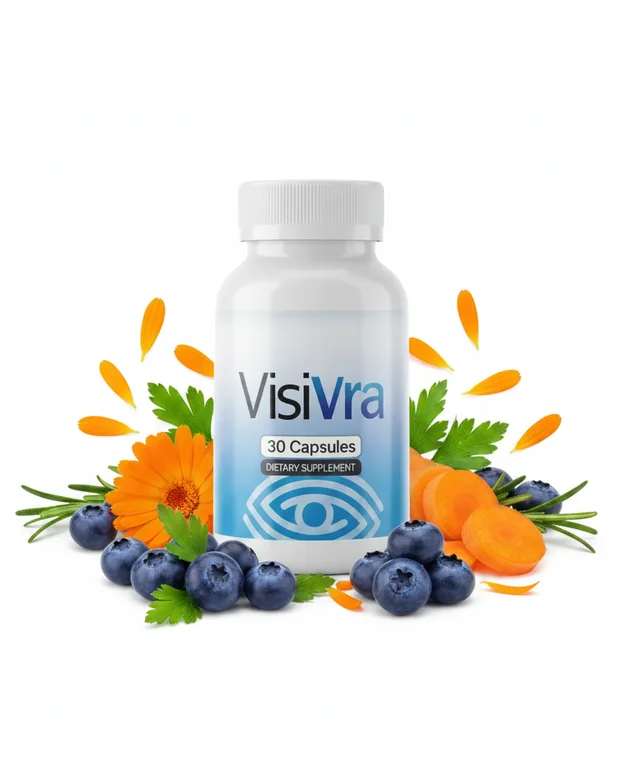
What the two have in common is the honest boundary of their claims. Neither corrects refractive error. Neither is a treatment or cure for eye disease. A supplement like Visivra is designed to support everyday eye and macular health over months of consistent use — it will not sharpen a blurry prescription any more than an eye-exercise app will, and any product suggesting it can is overstepping. If you want the detail on the nutrition side, our article on taking eye supplements with food for absorption covers how these fat-soluble carotenoids are best used.
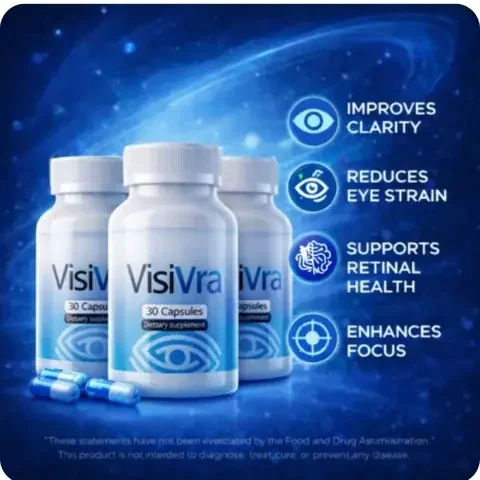
A different lever for eye health
Exercises train coordination; Visivra supplies the carotenoids and antioxidants the macula uses — lutein, zeaxanthin, bilberry, beta-carotene, zinc and vitamins C and E. Support over months, not a fix for your prescription, and not a treatment for any condition.
Get OfferHow to spot an overblown claim
A few tells separate legitimate vision therapy from wishful marketing:
- It promises to end your need for glasses. This is the clearest red flag; refractive error is structural and cannot be trained away.
- It treats everyone the same. Real vision therapy follows a diagnosis. A one-size routine sold to the general public is not that.
- It cites "ancient" or "suppressed" methods. The Bates method and its descendants have been examined and found wanting; novelty of packaging is not evidence.
- It has no professional supervision. The strong CITT evidence was for office-based, supervised therapy, not an unsupervised app.
By contrast, if an optometrist or orthoptist diagnoses convergence insufficiency and prescribes supervised therapy, that is exactly the evidence-based use the research supports.
What the evidence does not show
No correction of refractive error. There is no good evidence that eye exercises reduce myopia, hyperopia or astigmatism or lessen dependence on corrective lenses.
No general "vision boost." Outside diagnosed binocular-vision conditions, exercises have not been shown to improve everyday visual acuity in healthy eyes.
Not interchangeable with supplements, and neither treats disease. Exercises and nutrients address different things, and neither is a treatment or cure for any eye condition. Sudden or worsening blur, double vision or eye pain warrants a professional eye examination, not a self-directed routine.
Related reading
- Do blue light glasses work? The evidence
- Do carrots improve night vision? Busting the myth
- Contrast sensitivity explained for vision
- Take eye supplements with food for absorption
Medical note: this article is general information about published research, not medical advice. Dietary supplements are not intended to diagnose, treat, cure or prevent any disease. Speak to a qualified healthcare professional before starting any supplement, particularly if you smoke, have recently quit, are pregnant or nursing, or take prescription medication.
Frequently asked questions
Can eye exercises reduce the need for glasses?
No. Short-sightedness, long-sightedness and astigmatism are caused by the physical shape and length of the eye and the focusing power of its lens. No exercise changes those structures, so eye exercises cannot correct refractive error or remove the need for glasses or contact lenses. Programmes that promise otherwise are not supported by evidence.
What is convergence insufficiency?
Convergence insufficiency is a condition in which the eyes struggle to turn inward and work together on near tasks like reading, causing eye strain, blur or double vision. It is the one area where structured eye exercises, delivered as supervised vision therapy, have strong trial support, notably from the Convergence Insufficiency Treatment Trial.
Does the 20-20-20 rule improve eyesight?
It improves comfort, not sharpness. Every 20 minutes, look at something about 20 feet away for 20 seconds. This gives the focusing muscles a rest and prompts blinking, which eases screen-related eye strain. It does not sharpen your vision or change your prescription, and it is not a cure for anything.
Do eye exercises and supplements do the same thing?
No, they address different things. Eye exercises train how the eyes coordinate and focus, which matters for specific conditions like convergence insufficiency. Nutrients such as lutein and zeaxanthin are studied for the macular pigment and general eye support. Neither corrects refractive error, and neither is a treatment or cure for eye disease.
Scientific references
- Convergence Insufficiency Treatment Trial (CITT) Study Group. Randomized clinical trial of treatments for symptomatic convergence insufficiency in children. Arch Ophthalmol. 2008;126(10):1336–49. PMID 18852411
- Rawstron JA, Burley CD, Elder MJ. A systematic review of the applicability and efficacy of eye exercises. J Pediatr Ophthalmol Strabismus. 2005;42(2):82–8. PMID 15825744
- American Academy of Ophthalmology. Do eye exercises improve vision? aao.org
- American Academy of Ophthalmology. Computers, digital devices and eye strain. aao.org
- Nolan JM, Power R, Stringham J, et al. Enrichment of macular pigment enhances contrast sensitivity in subjects free of retinal disease: CREST report 1. Invest Ophthalmol Vis Sci. 2016;57(7):3429–3439. PMID 27367585
Support the macula with named nutrients
Lutein and zeaxanthin with bilberry, beta-carotene, zinc and antioxidant vitamins C and E, sold through the official store with a 60-day money-back guarantee. Honest about what it is — and is not — for.
Get Offer